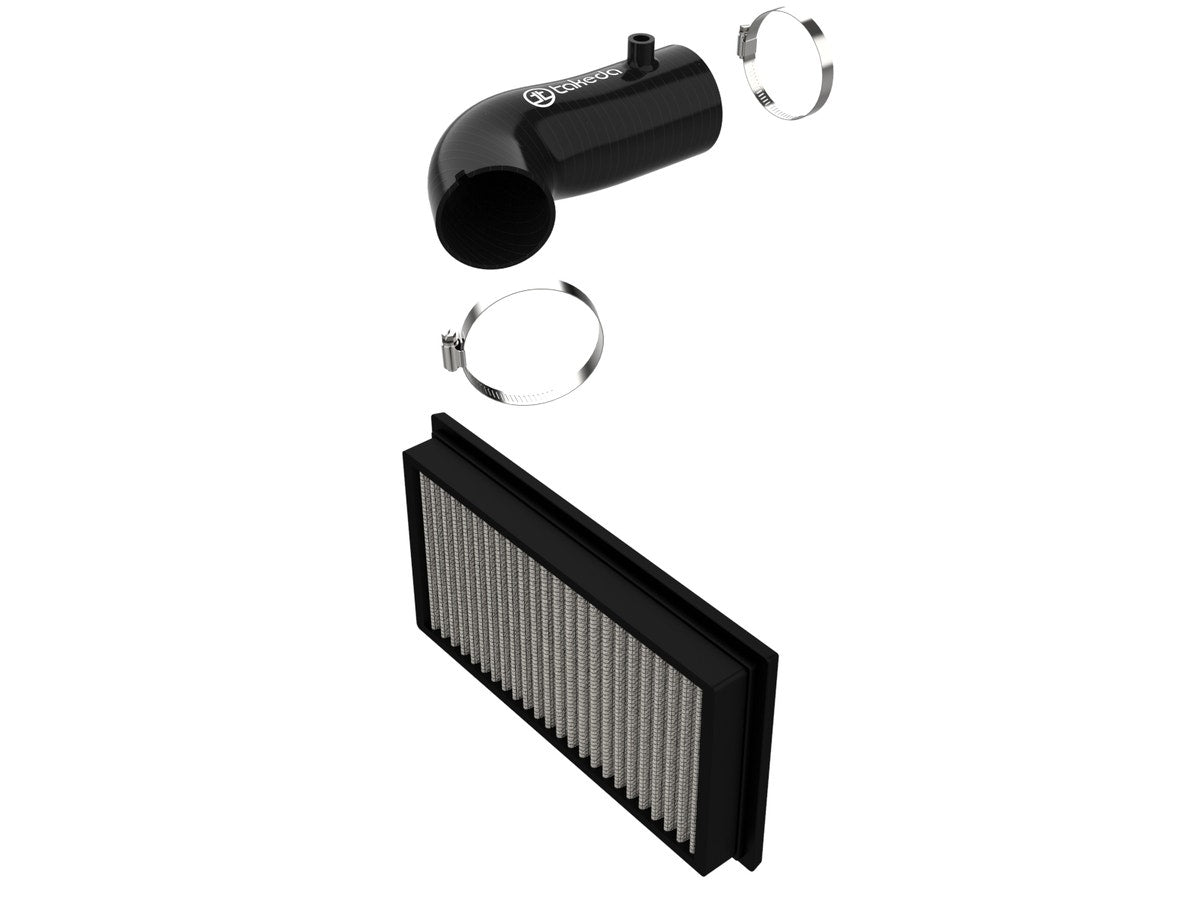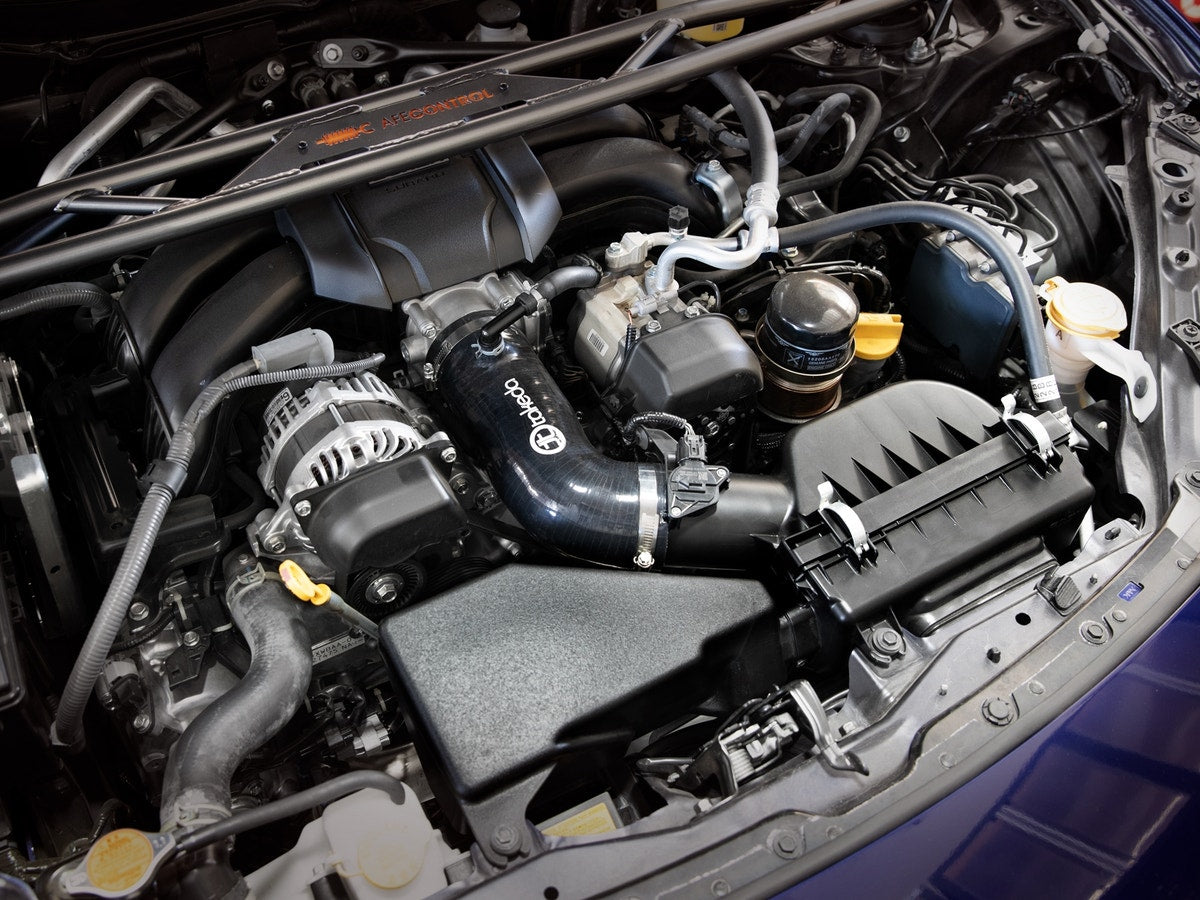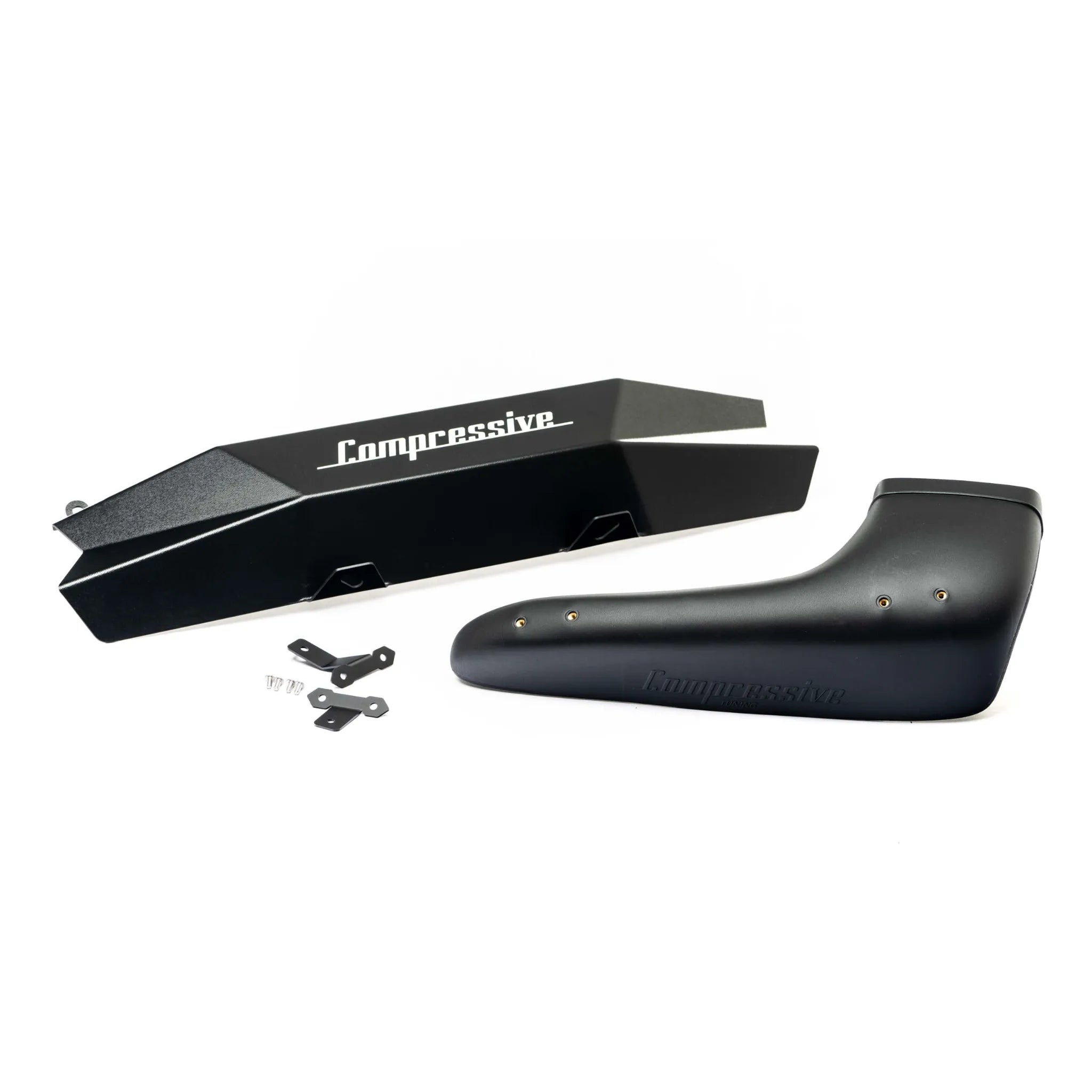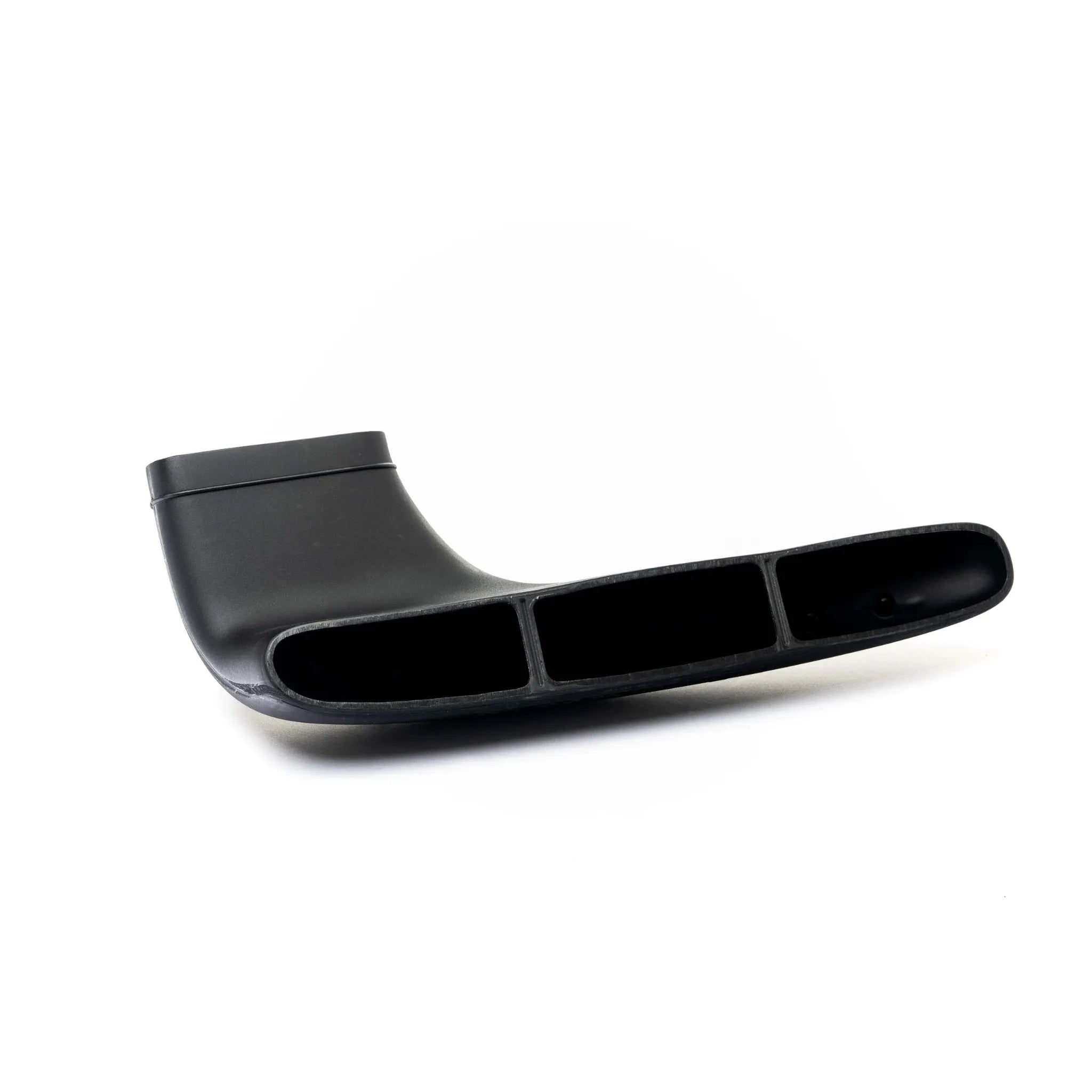
Performance Intakes For FA24

The second-generation Toyota GR86 and Subaru BRZ respond well to smart, measured upgrades, but an intake is not automatically a power mod just because it replaces the factory airbox. The FA24 is sensitive to airflow, intake temperature, and mass-airflow sensor behavior. A system that sounds aggressive or looks incredible may not deliver the same result as one developed around consistent air temperature and a clean MAF signal.

That is why choosing the best intake for a 2022–2026 GR86 or BRZ is really about choosing the right design philosophy. Do you want factory fit and finish? Maximum induction sound for the money? A fully sealed carbon system built for a tuned car? Or a balanced carbon intake with measurable gains on a real Driven.Media build?

We are comparing four of the most distinct options for the platform: the GR Performance Air Intake, the K&N 69 Series Typhoon, the Eventuri Carbon Fiber Intake, and the Infinity Designs Carbon Fiber Intake. Each improves the factory setup in a different way, and each makes sense for a different type of build.

What Makes a Good GR86 or BRZ Intake?

The stock FA24 intake is already competent. It draws air from the front of the car, manages heat well, keeps the MAF signal stable, and controls noise with a resonator. An aftermarket intake needs to improve on that system without creating a new problem somewhere else.

We look at six things when comparing these kits:

  • Air temperature: A larger filter is useful, but hot engine-bay air can erase some of the benefit.
  • Airflow quality: Smooth, predictable flow through the MAF housing matters as much as total volume.
  • Power curve: A useful midrange or top-end gain matters more than a single peak number.
  • Sound: Removing the factory resonator can make the engine feel more alive even when the dyno change is modest.
  • Installation and service: Some systems install from above; others use front ducting that makes the job more involved.
  • Price and finish: Molded plastic, aluminum, and pre-preg carbon occupy very different budgets.
Load video:

Infinity Designs Carbon Fiber Intake

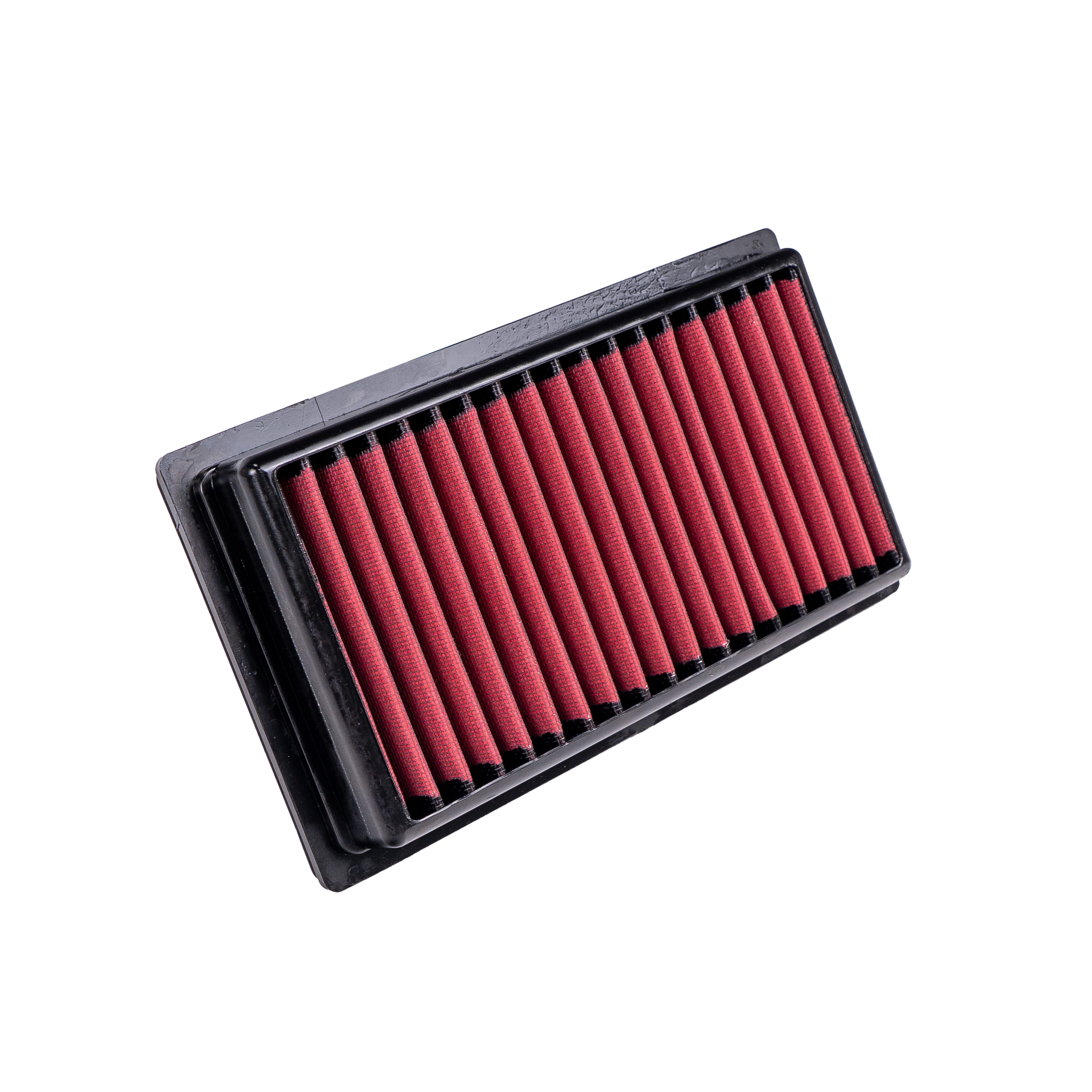
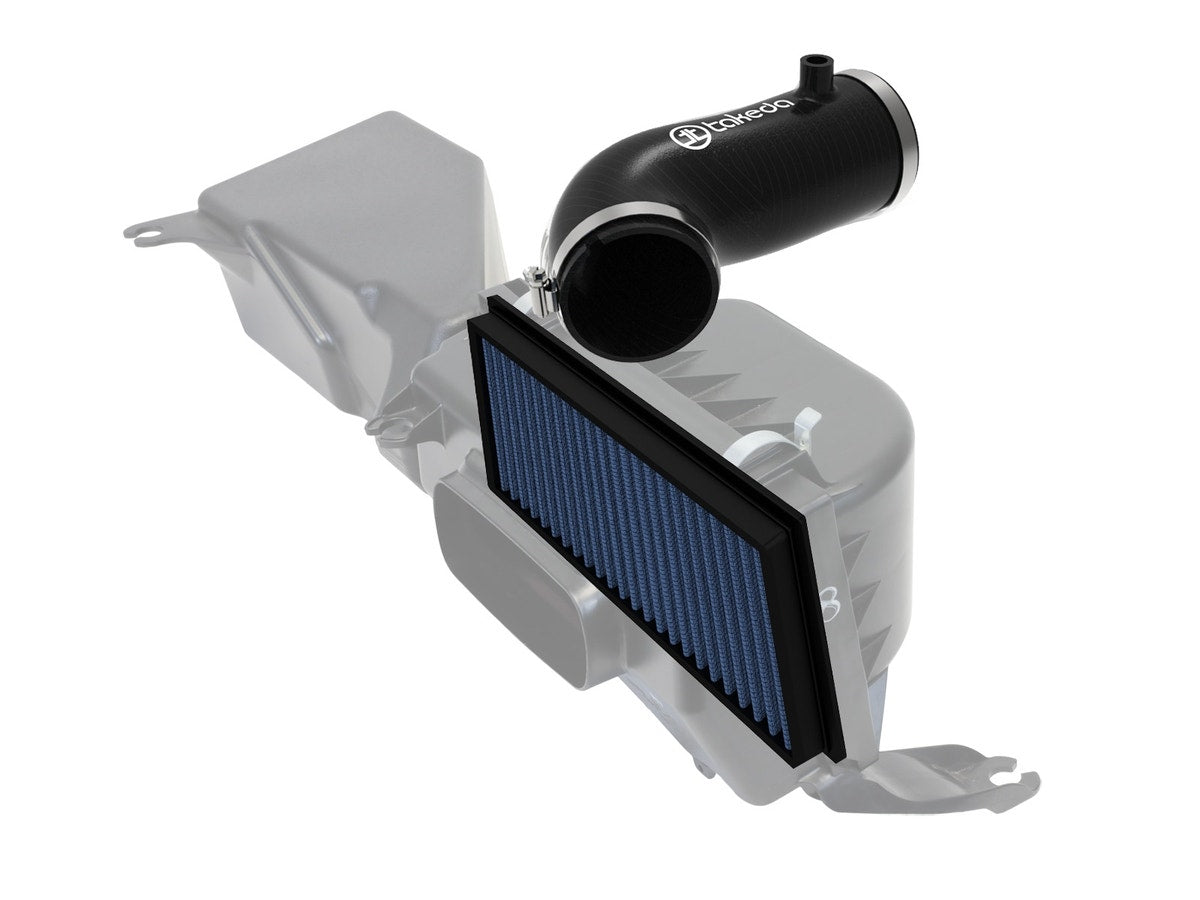
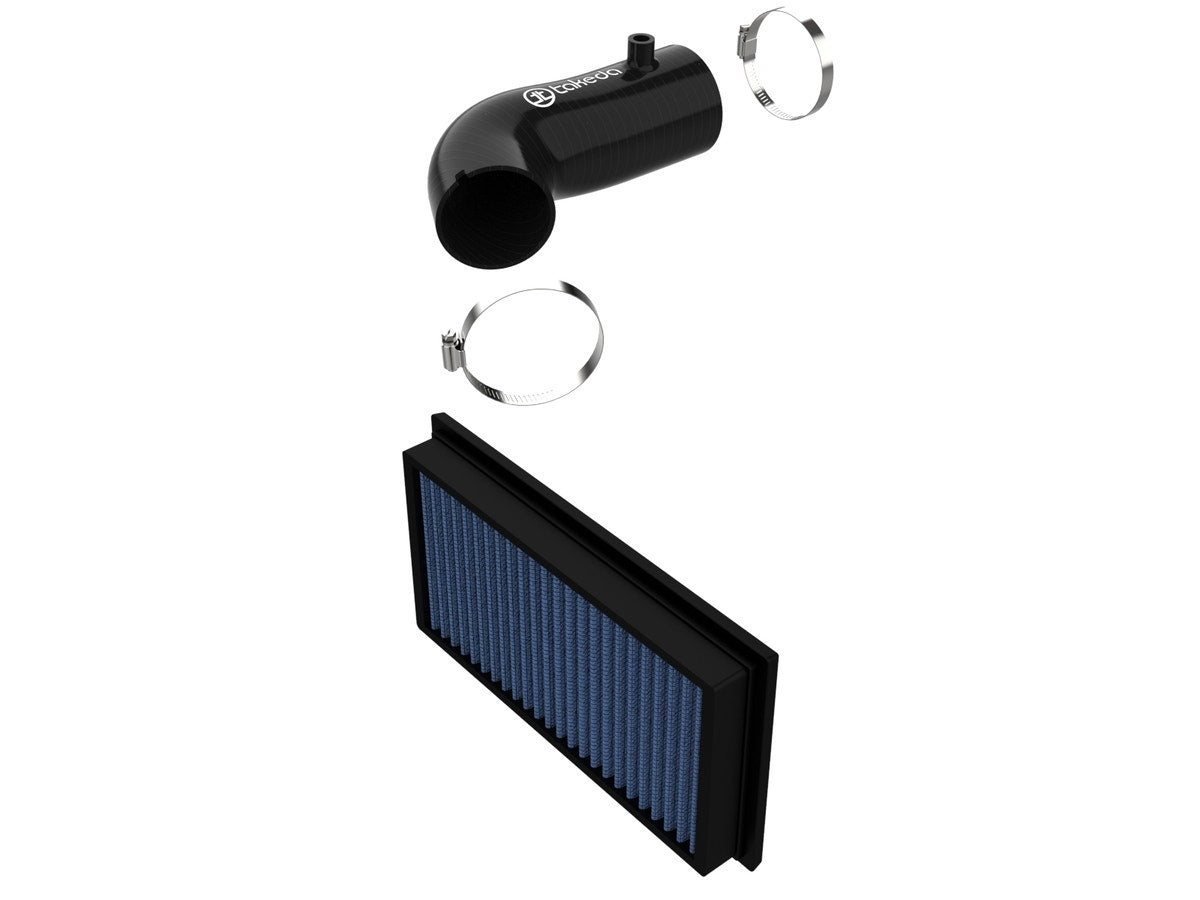
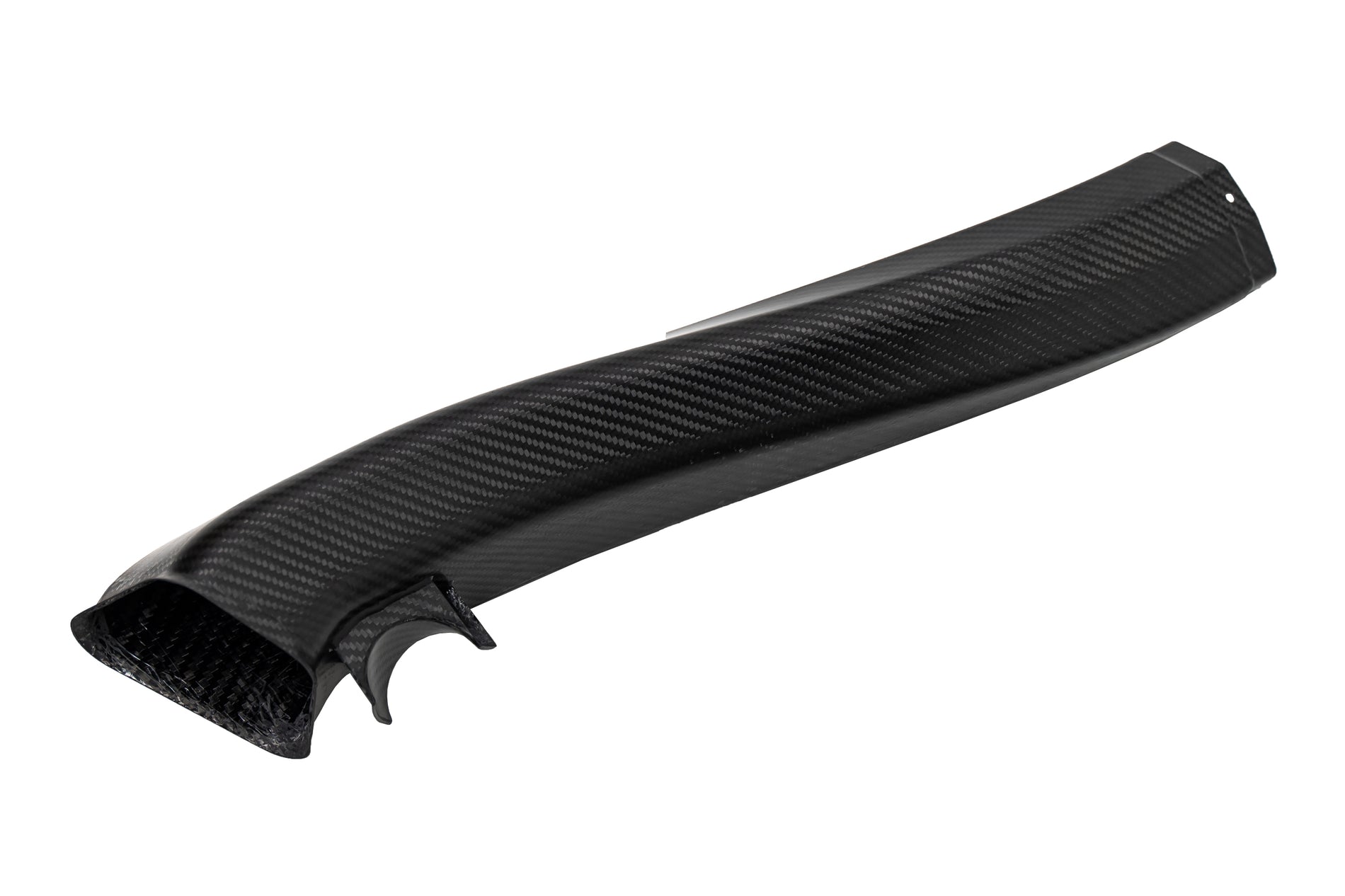
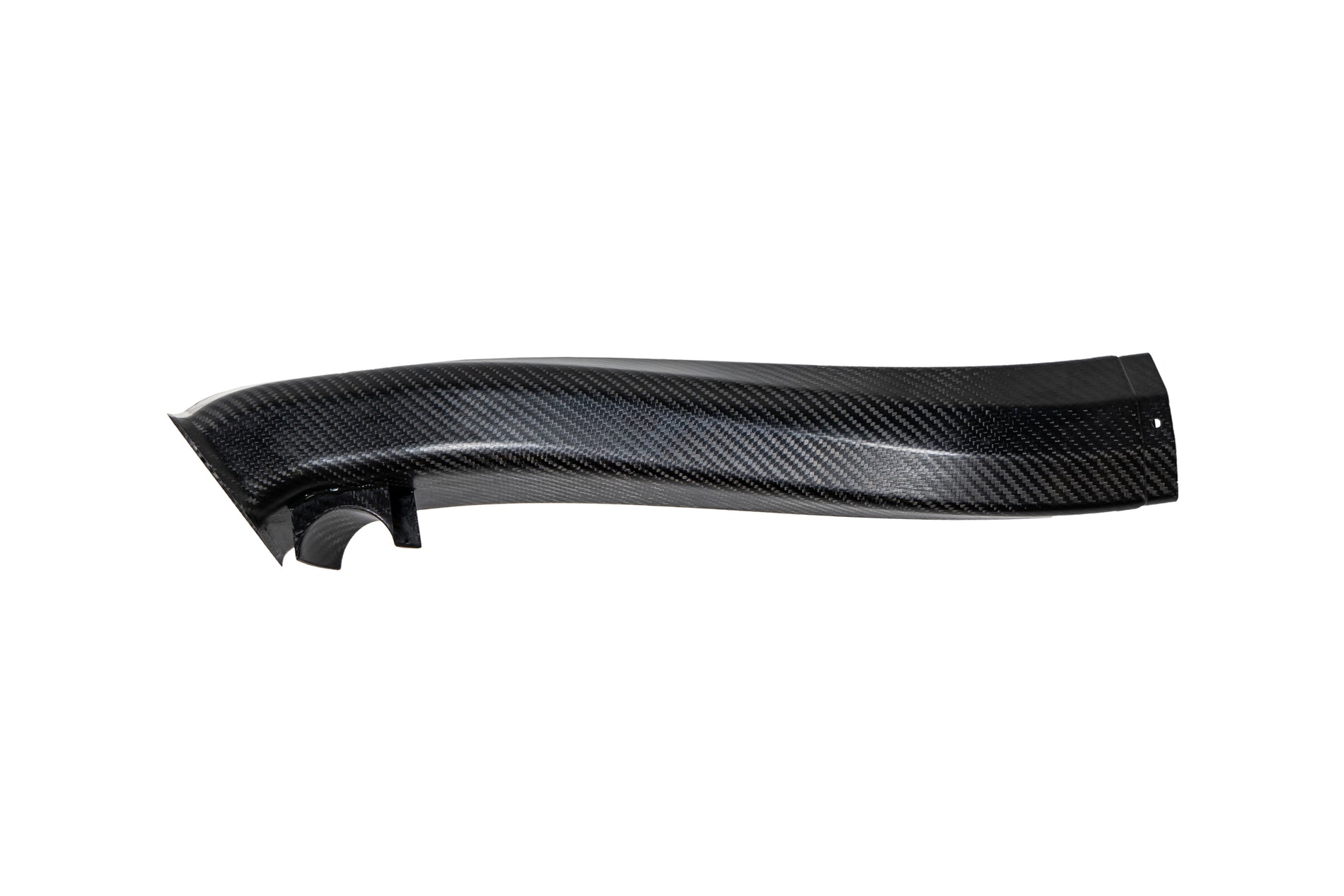
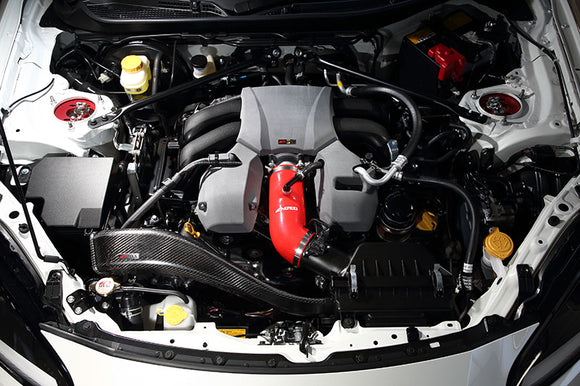
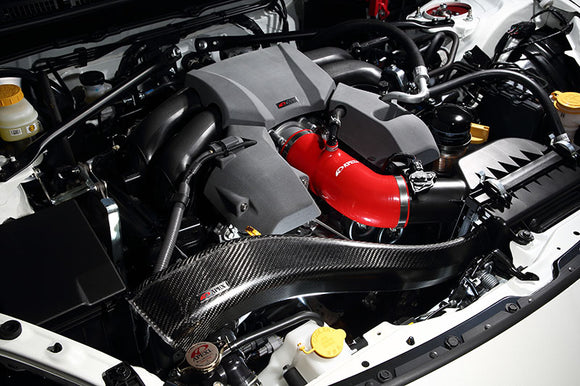
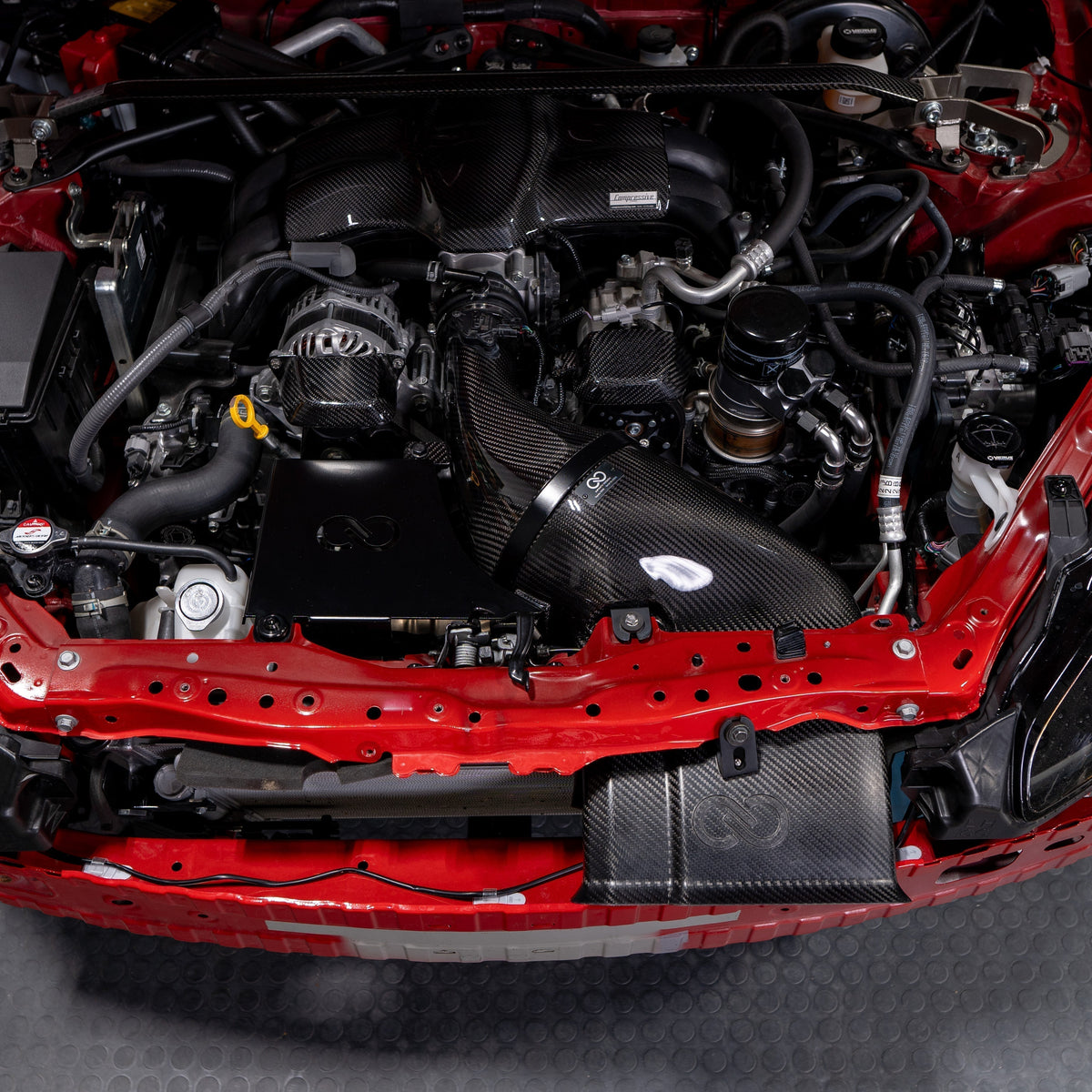
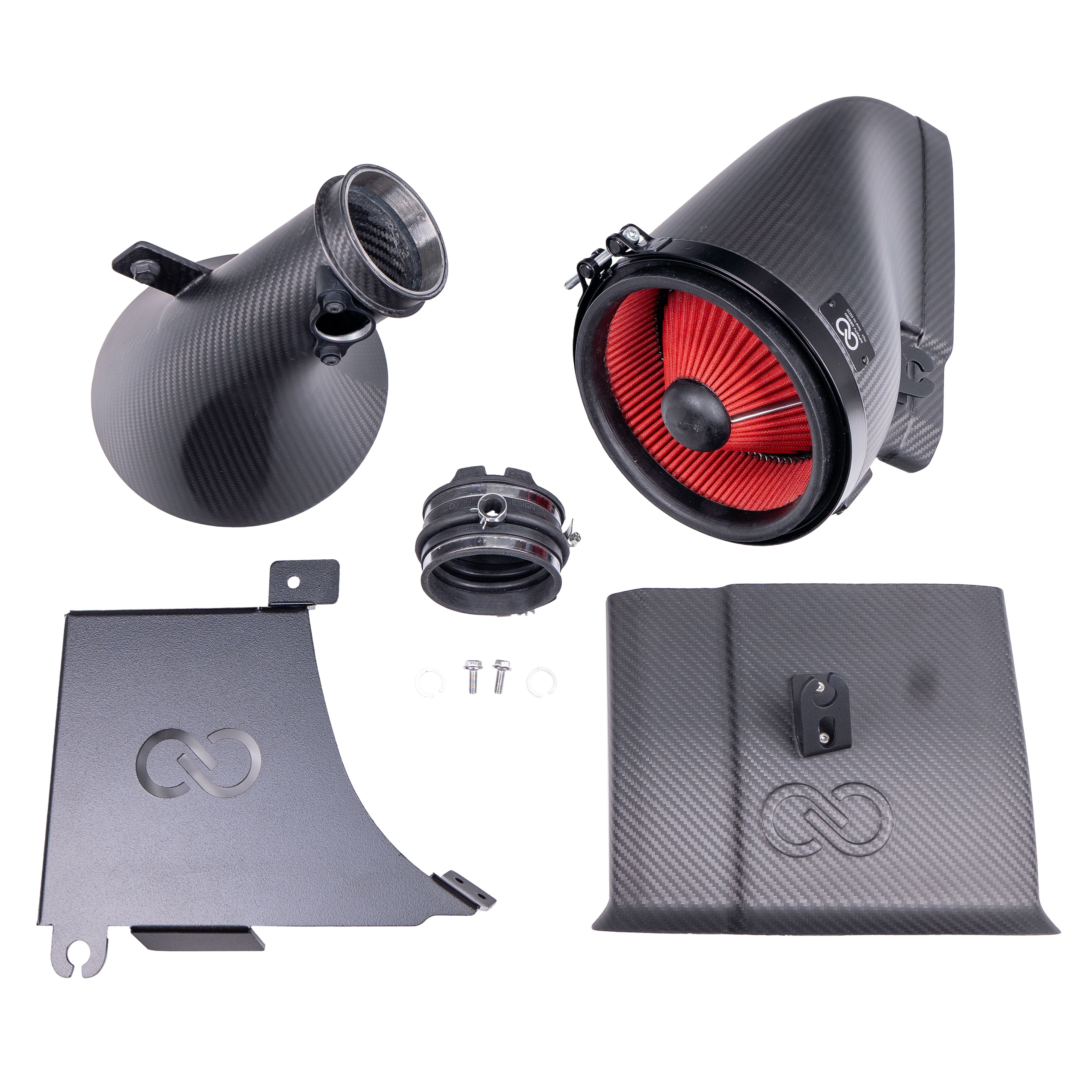
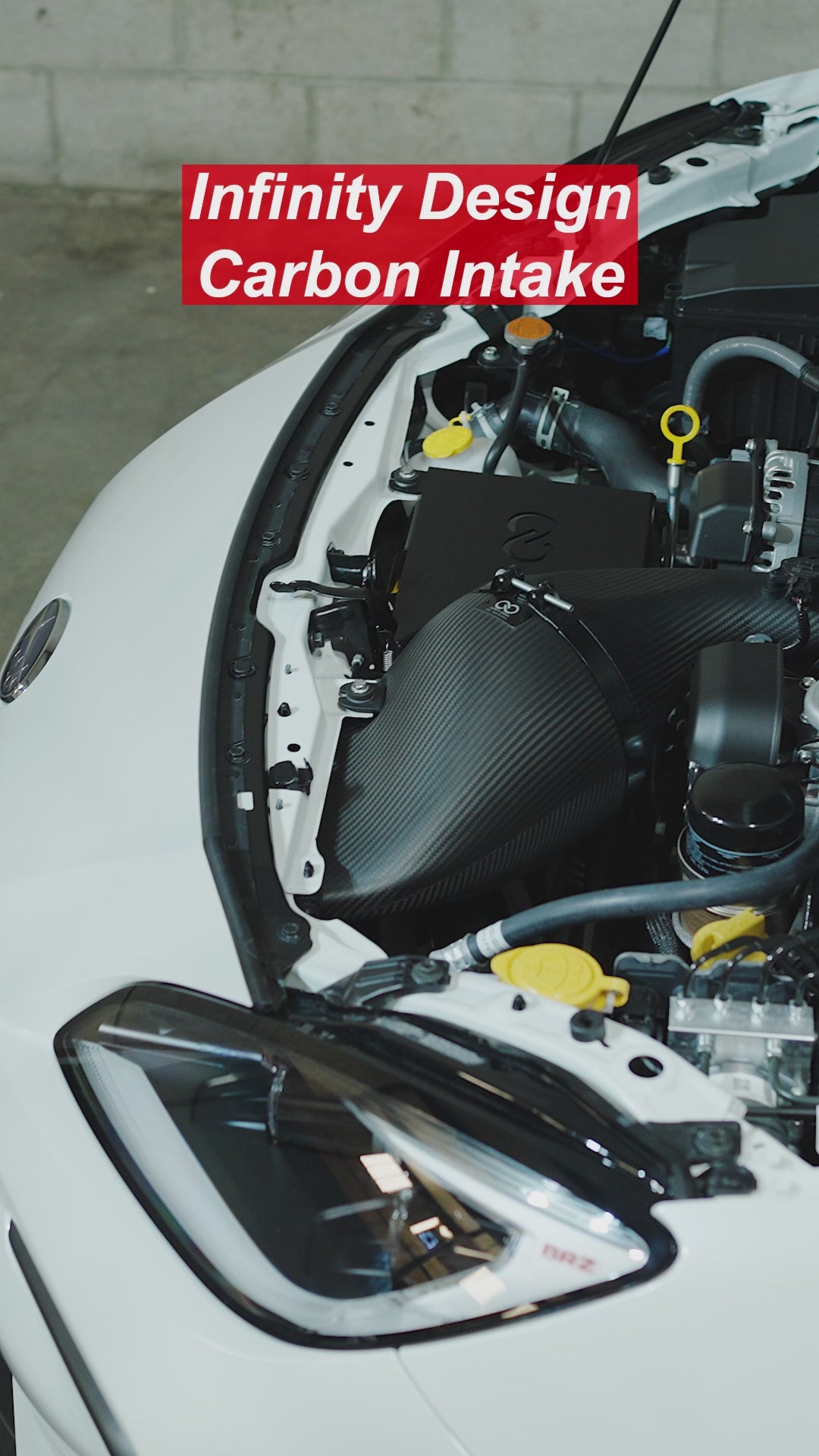
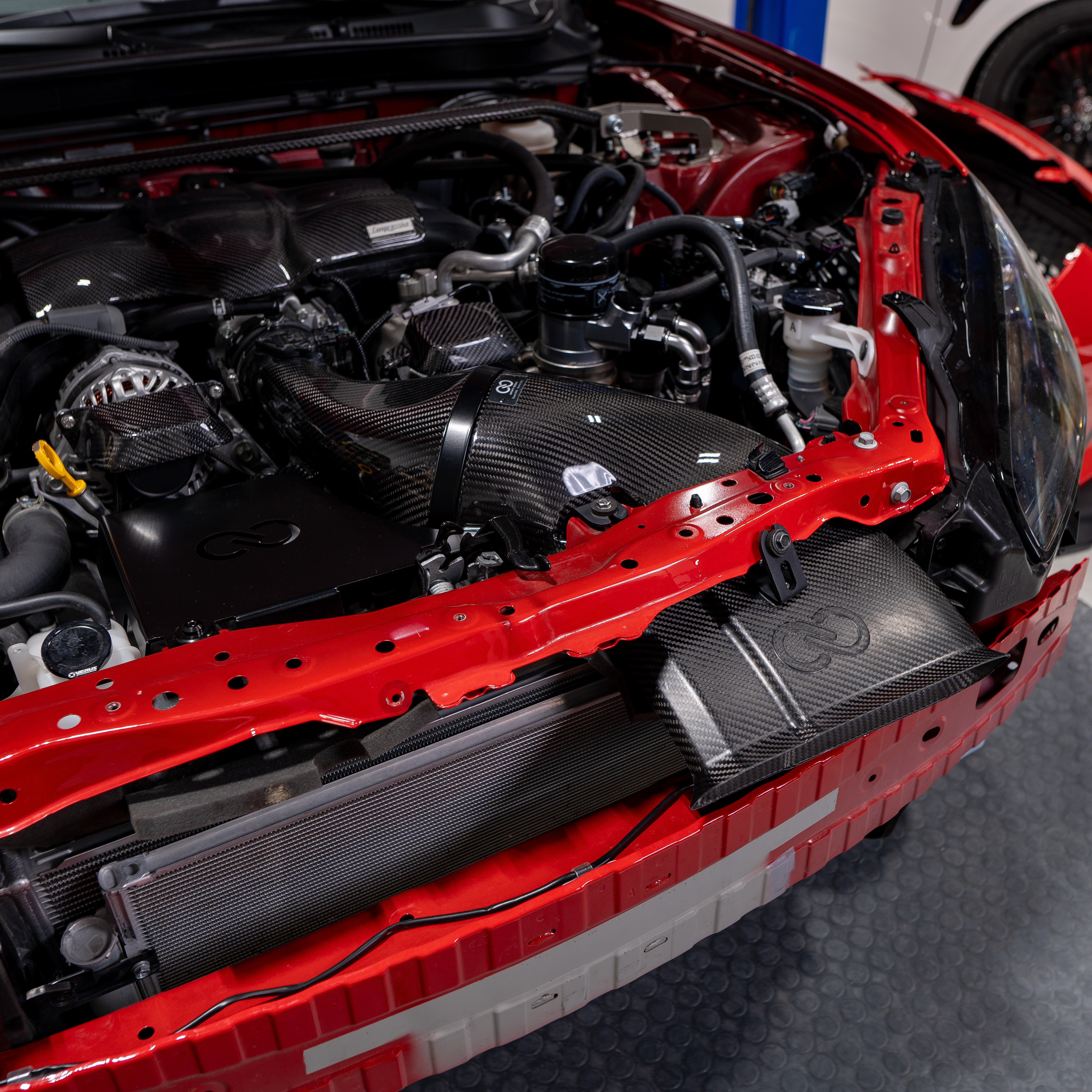
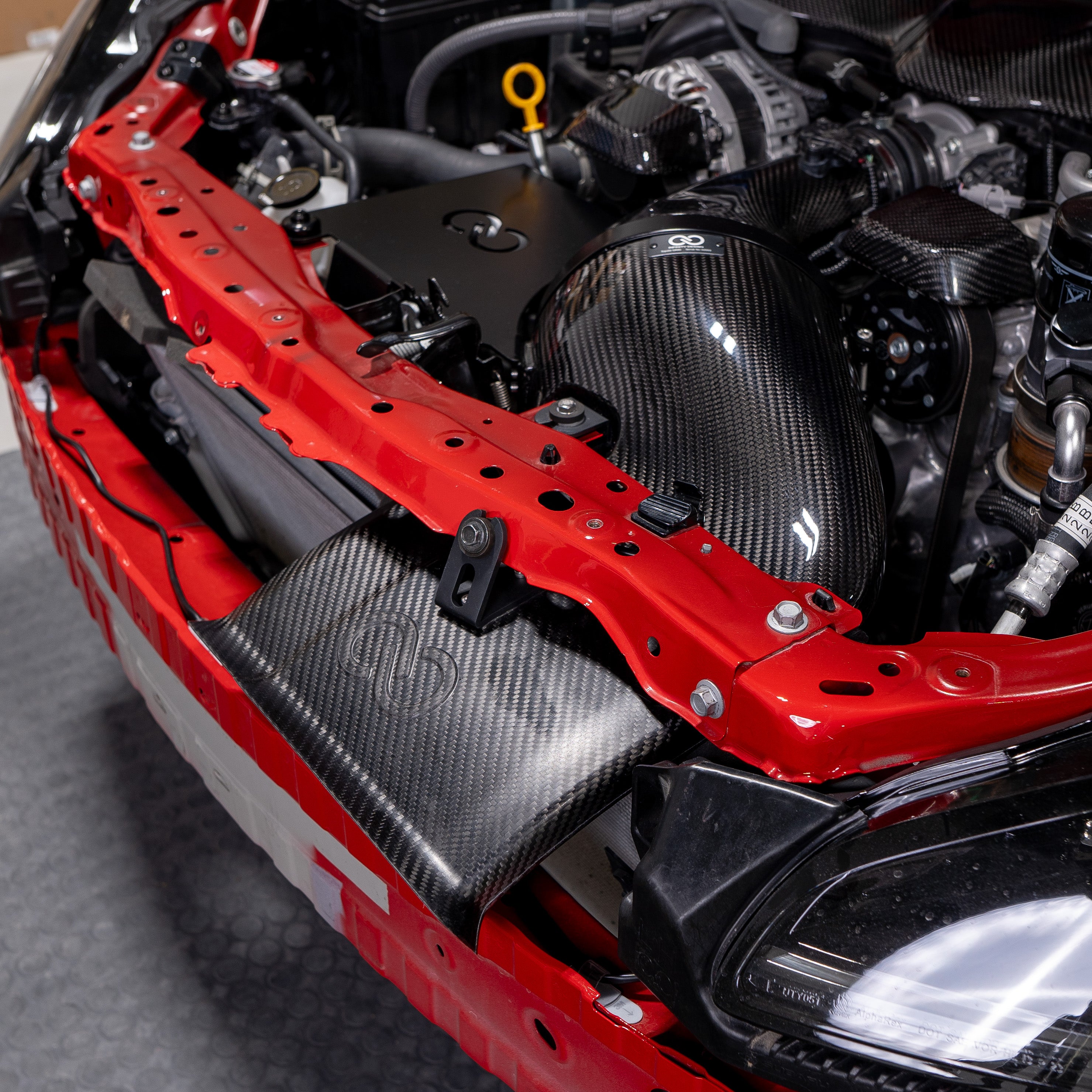
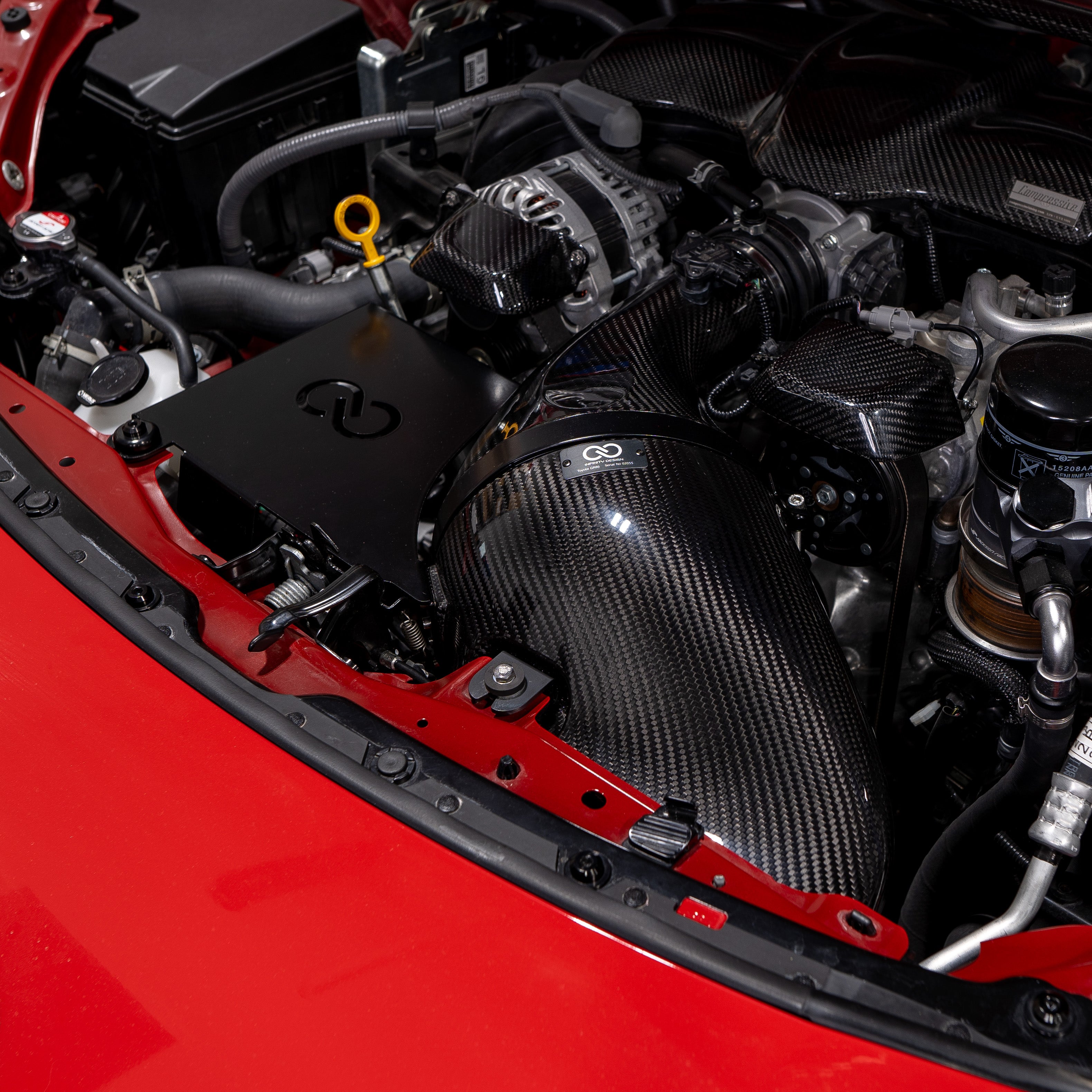
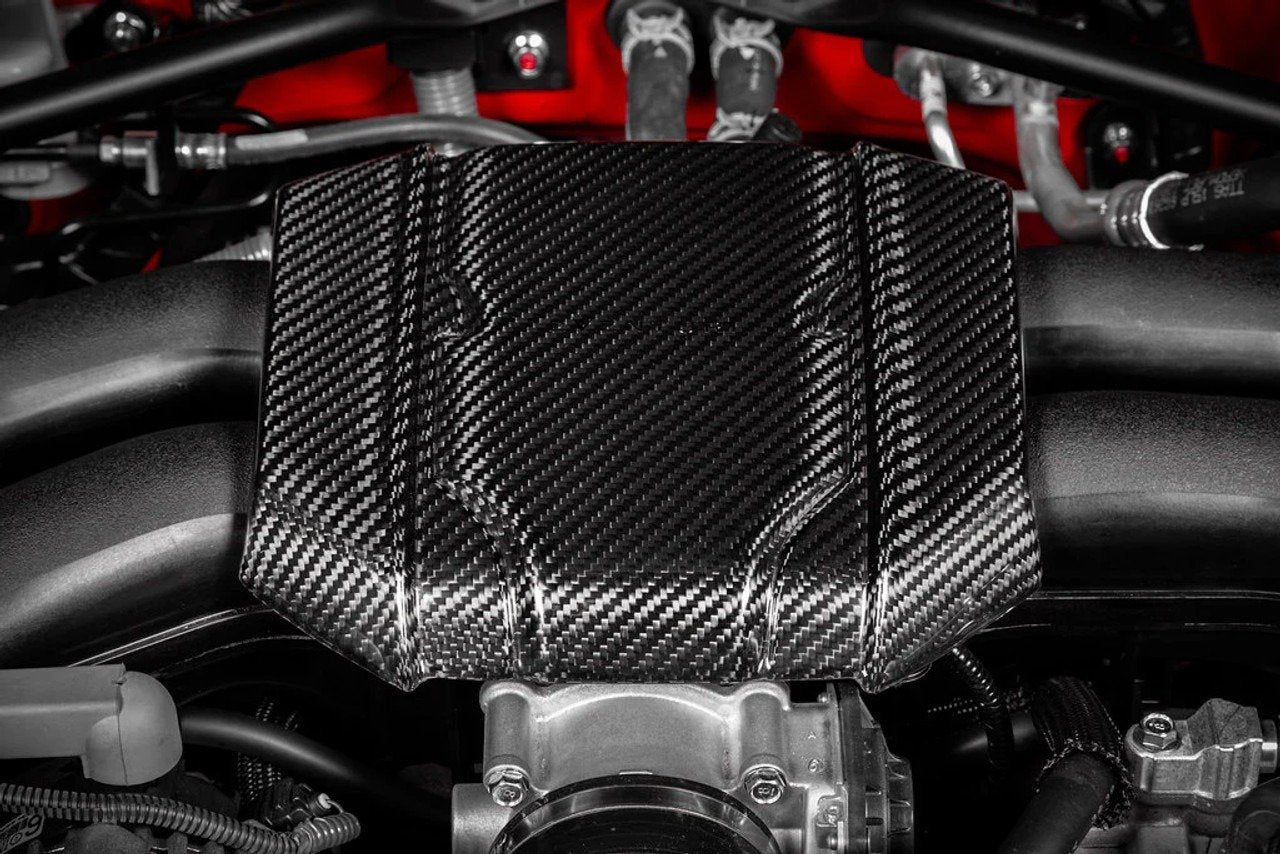
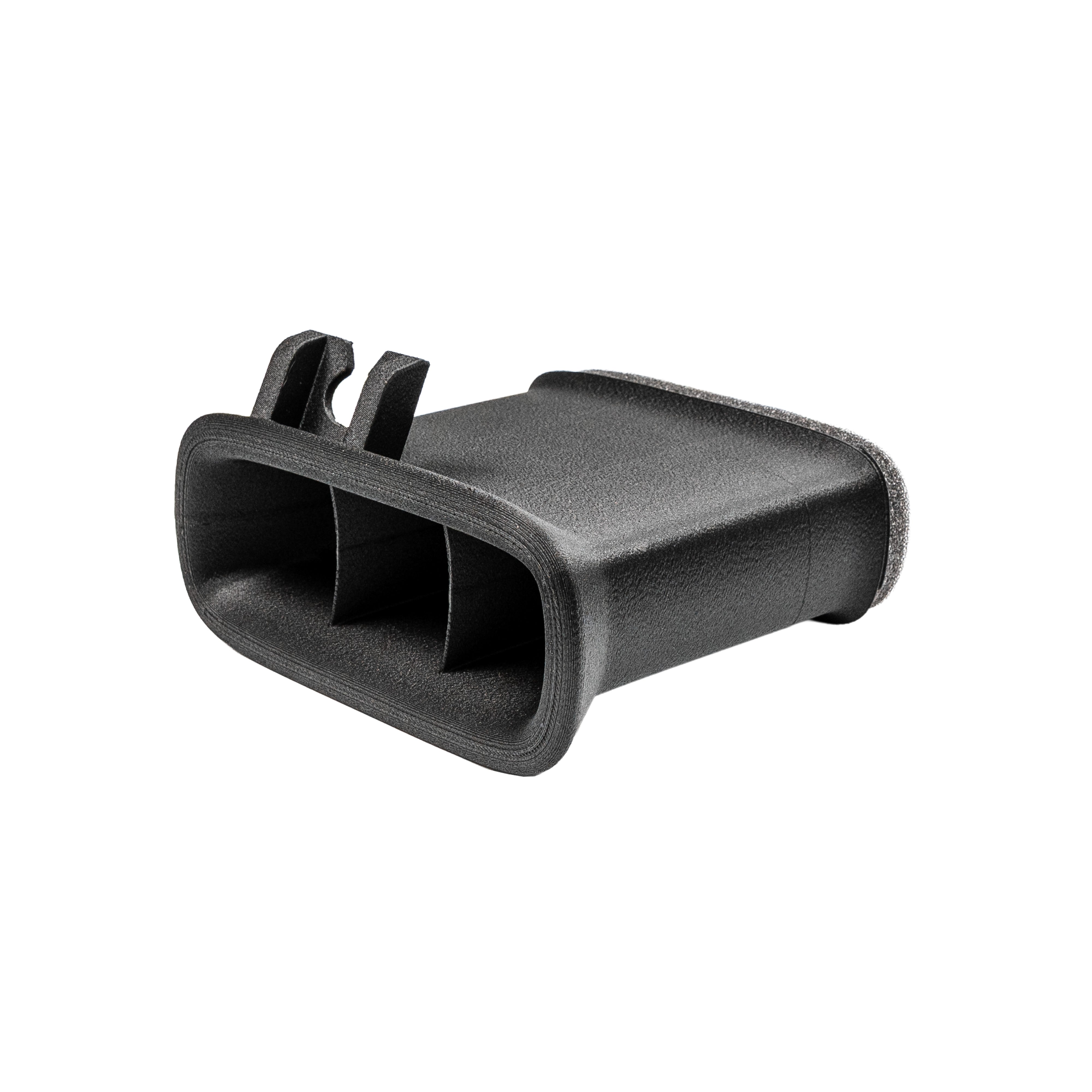
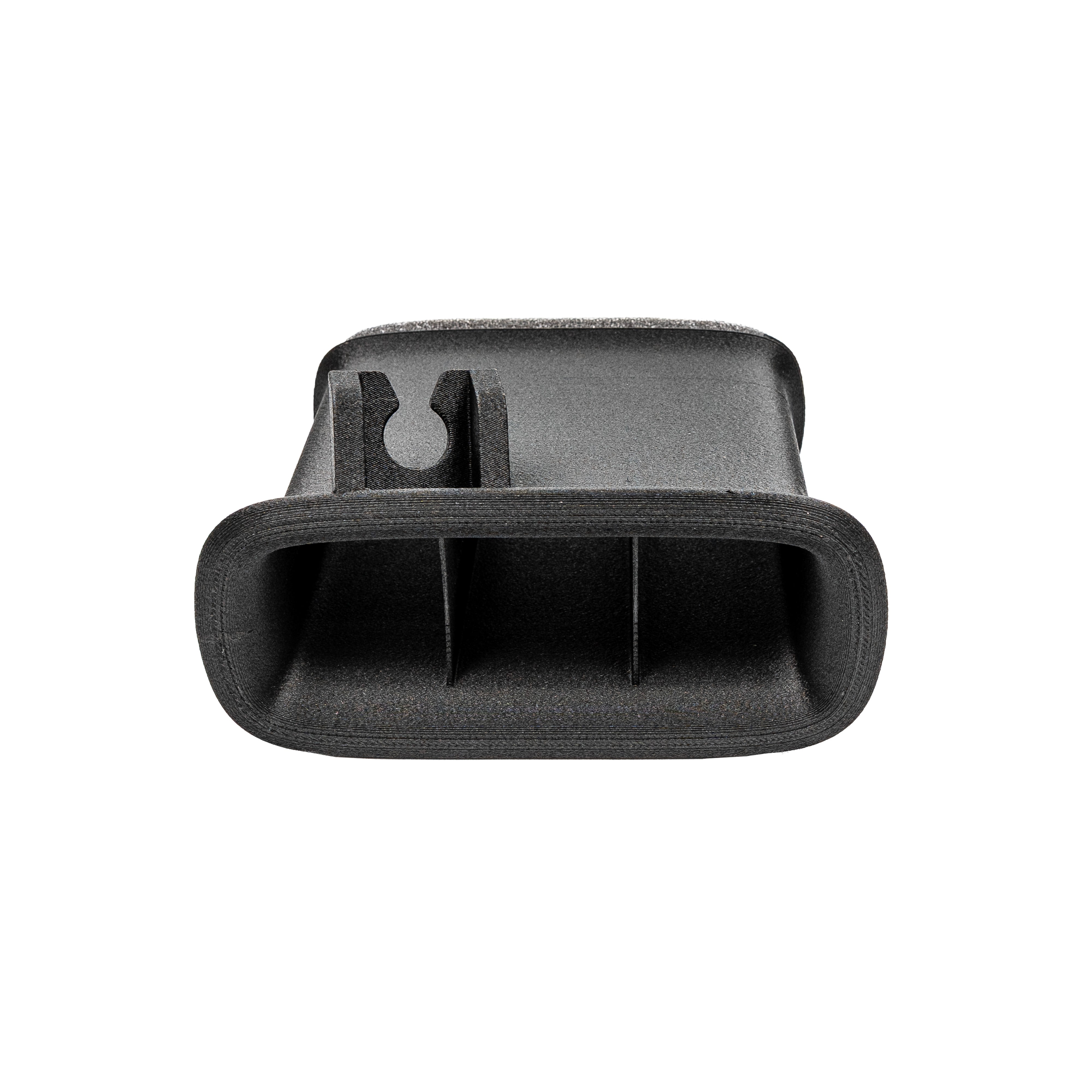
The Infinity Designs Carbon Fiber Intake sits between GR's factory restraint and Eventuri's flagship complexity. It follows the general path of the OEM intake but substantially enlarges the important pieces: the front inlet has roughly twice the cross-sectional area, the snorkel extends forward with a bellmouth entry, and the filter uses a massive 170 mm opening in a sealed carbon housing.

Infinity did not simply add another feed and assume that more openings meant more power. Early dual-feed prototyping created turbulence in front of the filter and did not improve dyno results. CFD analysis led the company back toward a cleaner single-feed path with more area, a smoother entry, and a larger filter. That is exactly the kind of development we want to see in an intake.

The front snorkel is critical. Infinity's testing found that the system ran 5–10 degrees Celsius warmer than the OEM intake without it. With the snorkel installed and drawing from the factory location, the intake matched the OEM system's temperature efficiency. This is why judging the airbox without considering the complete ducting misses the point.

Infinity publishes gains of 10–12 horsepower and 5–10 lb-ft of torque. More importantly for us, we tested it on our own 2022 GR86. On E85, the car made 230 horsepower and 182.9 lb-ft with the OEM intake, then 236 horsepower and 188.9 lb-ft with the Infinity system. That is a same-car gain of 6 horsepower and 6 lb-ft, along with the stronger induction sound and throttle response that make the upgrade noticeable from the driver's seat.

Where the Infinity Designs intake wins

  • Verified improvement in Driven.Media's own same-car dyno test
  • Sealed carbon housing and effective front snorkel
  • Large filter and smooth bellmouth inlet
  • Noticeably stronger induction sound under load
  • Available in matte or gloss carbon
  • Replacement service supported by the Infinity Design replacement air filter

Where it gives something up

It costs considerably more than the GR or K&N systems, and installing the full snorkel makes the job more involved than a basic under-hood swap. The filter is oiled, so it also needs proper service rather than a quick dry clean. Still, it offers much of the visual and thermal appeal of a premium carbon system at a lower price than the Eventuri.

Best for: The enthusiast who wants a carbon intake with sound, thermal management, and measurable performance without simply buying the most expensive option.

Load video:

Installing and Testing our Favorite Carbon Fiber Intake

Kevin installs and overviews Driven.Media's favorite Carbon Fiber intake yet, the Infinity Designs Carbon Intake.

Watch now

GR Performance Air Intake: The OEM+ Choice

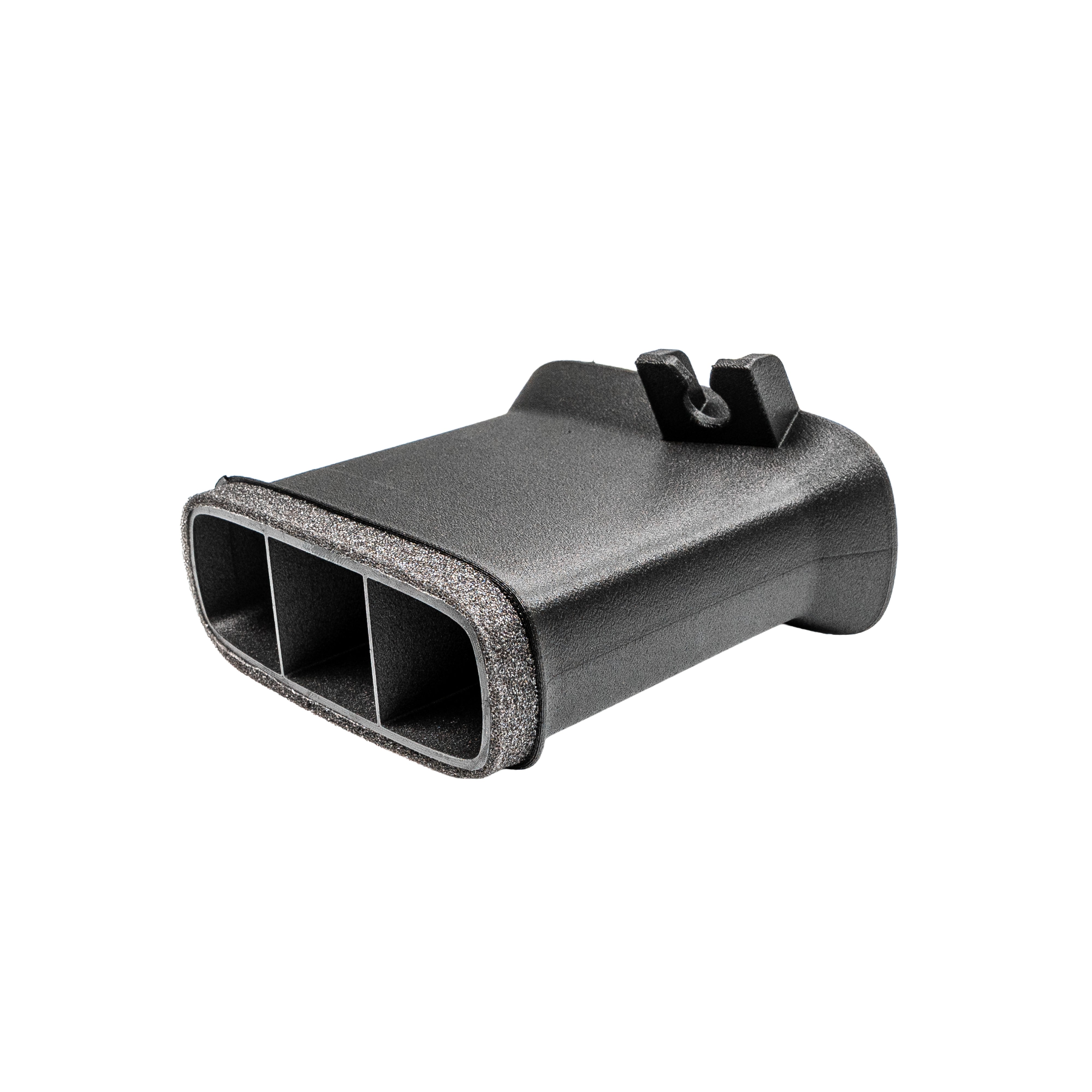
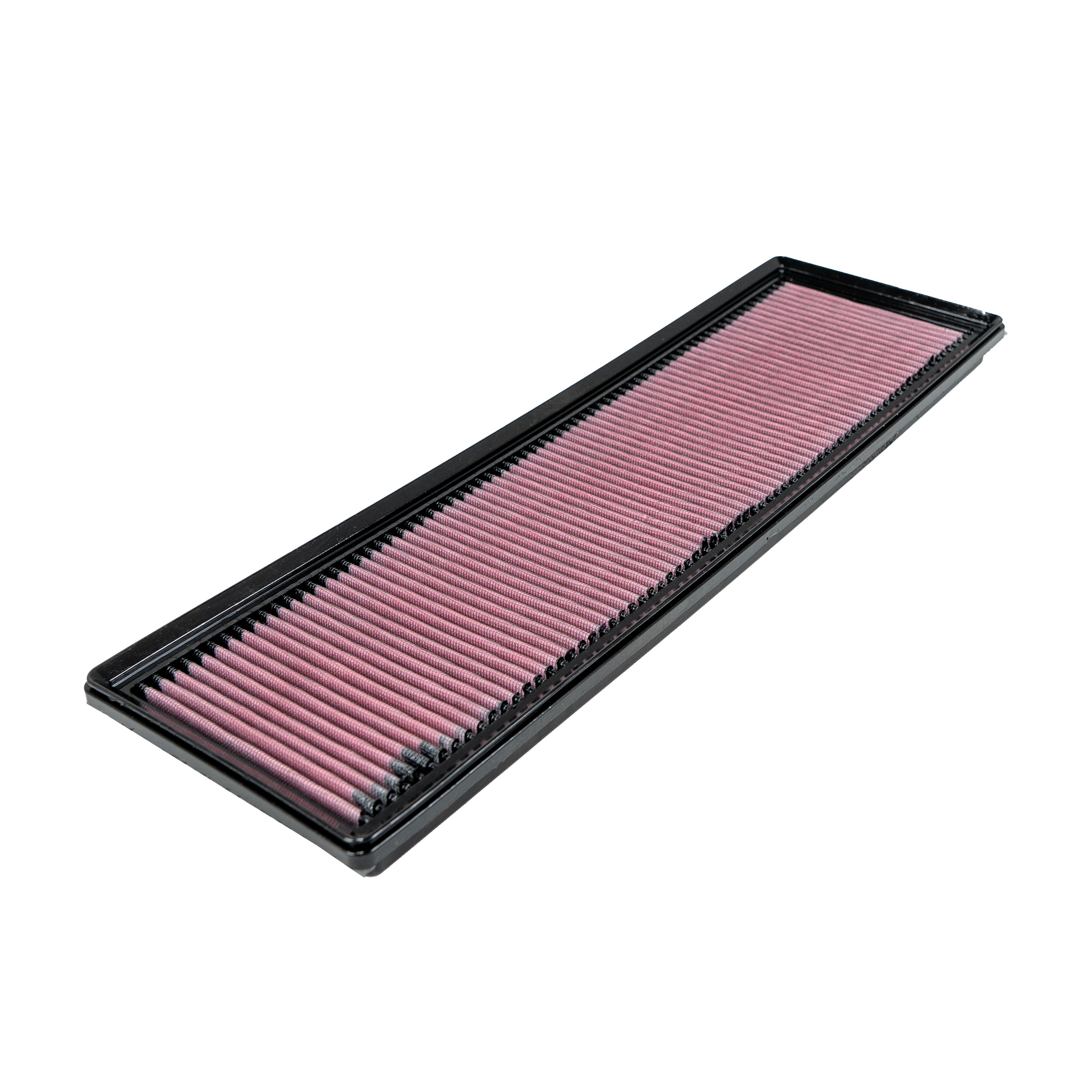
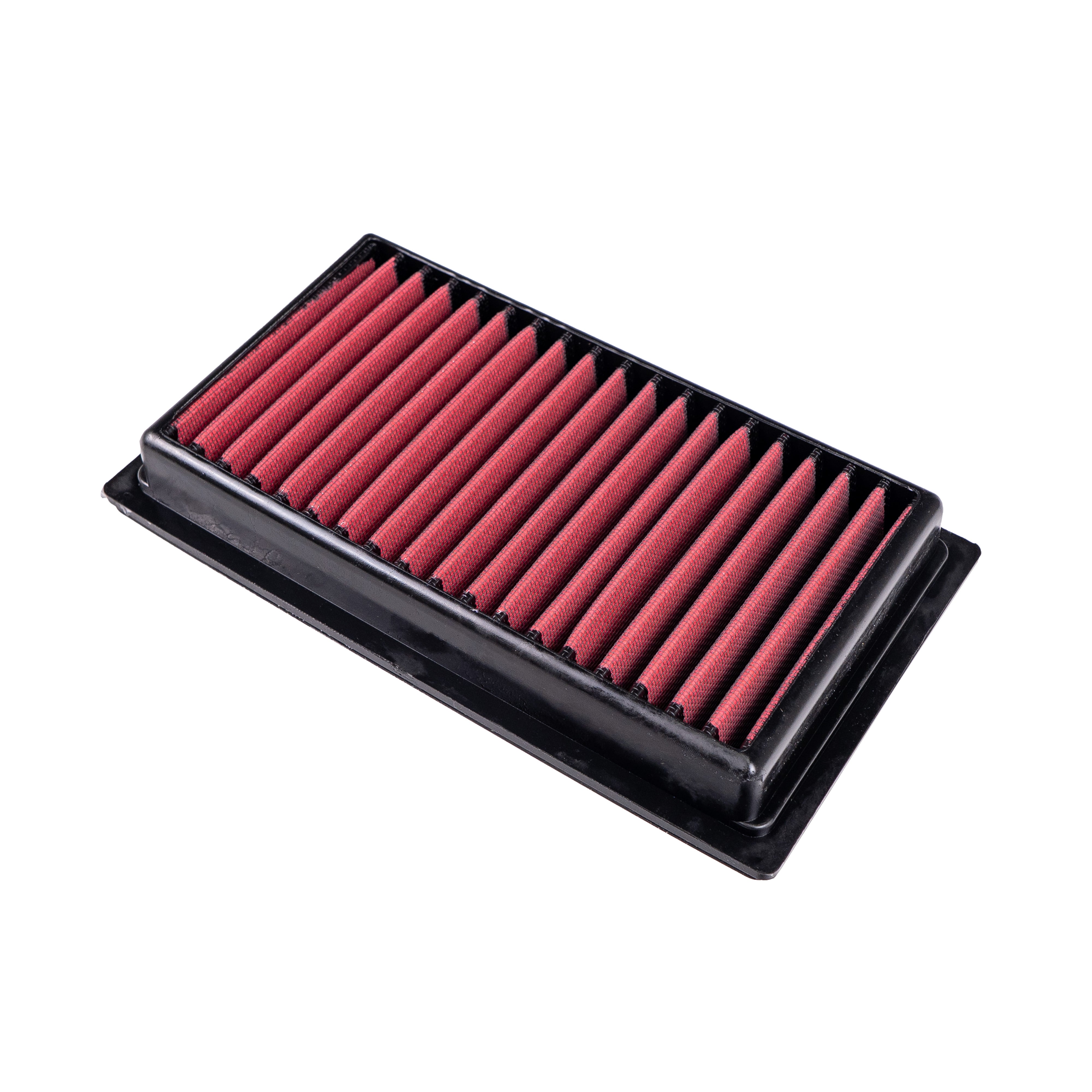
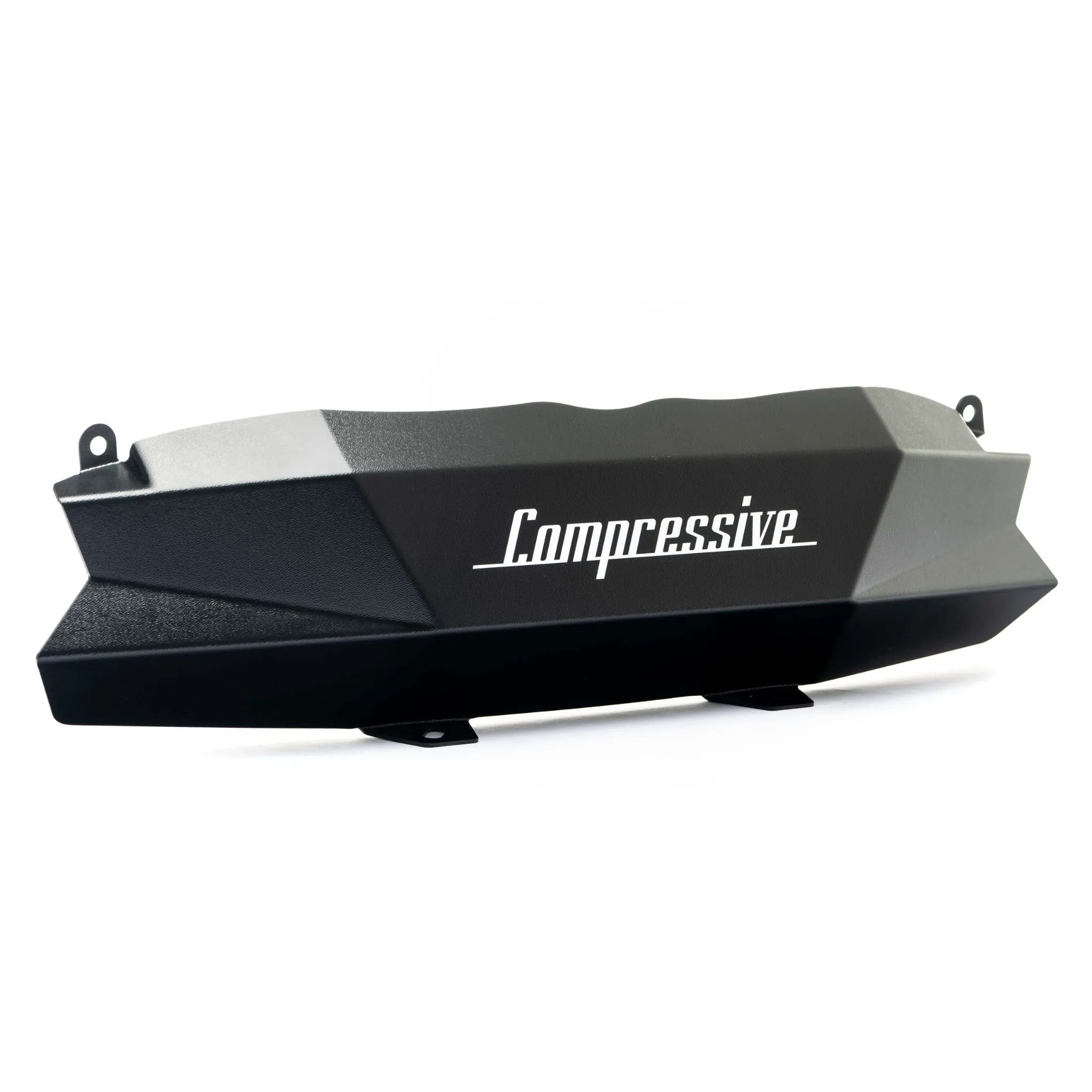
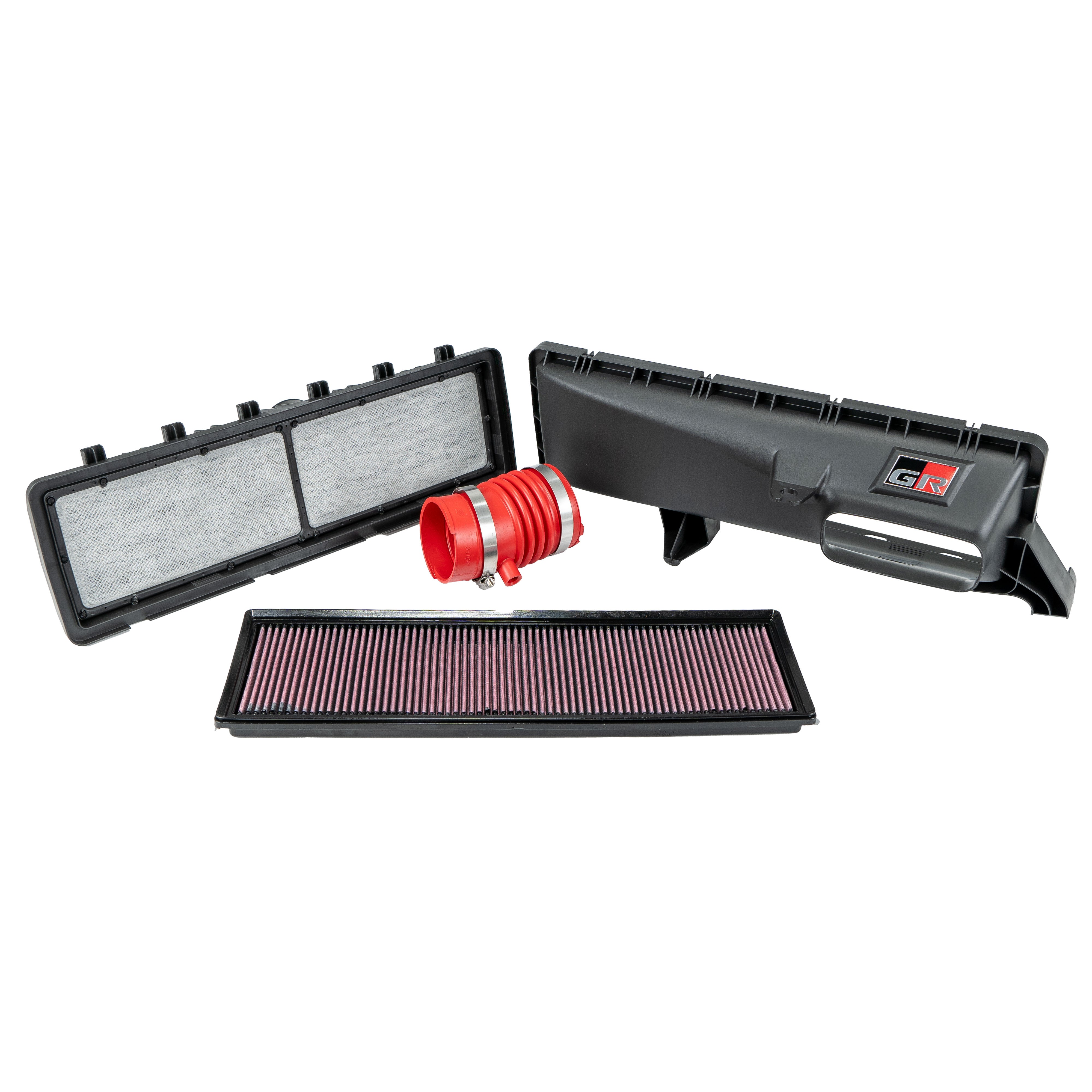
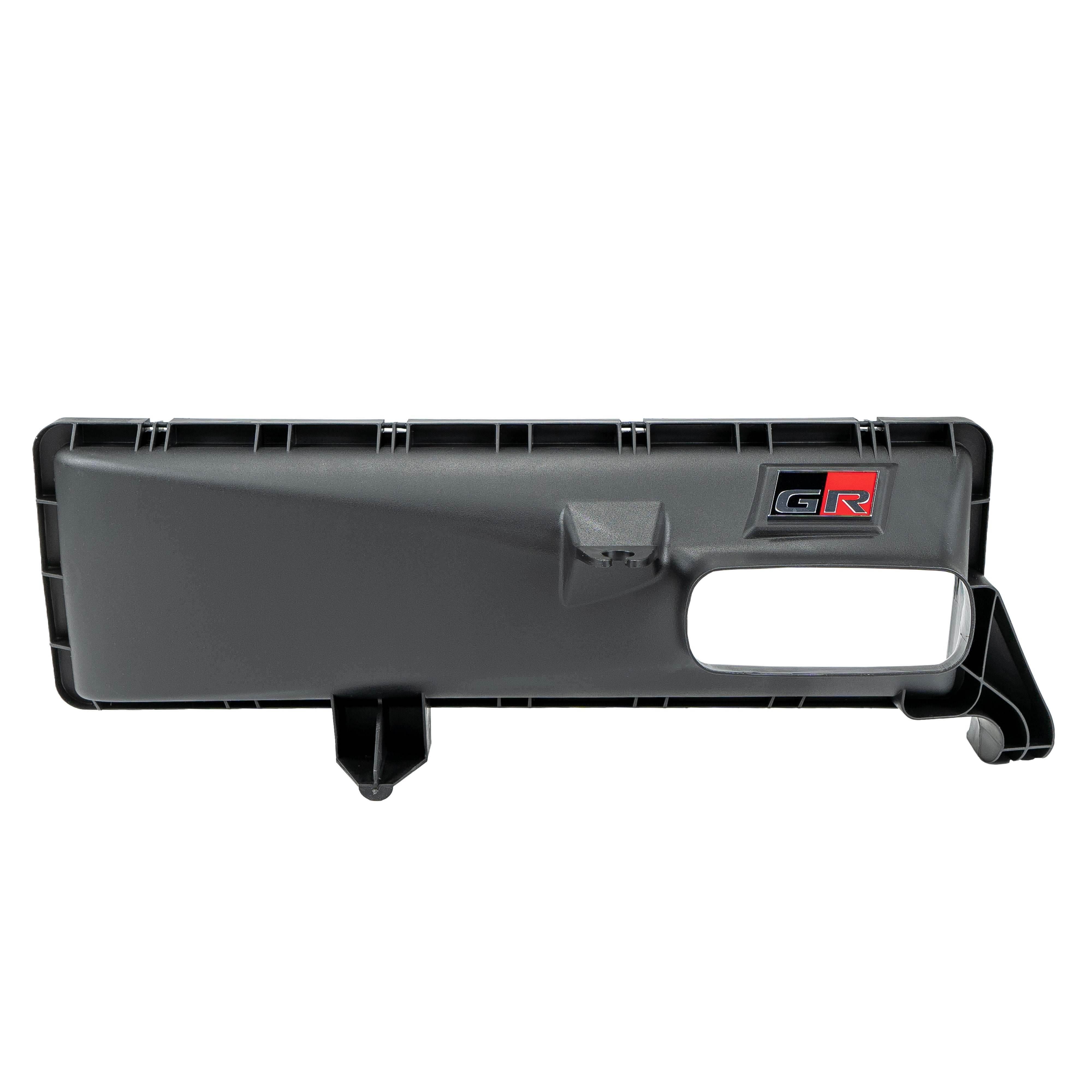
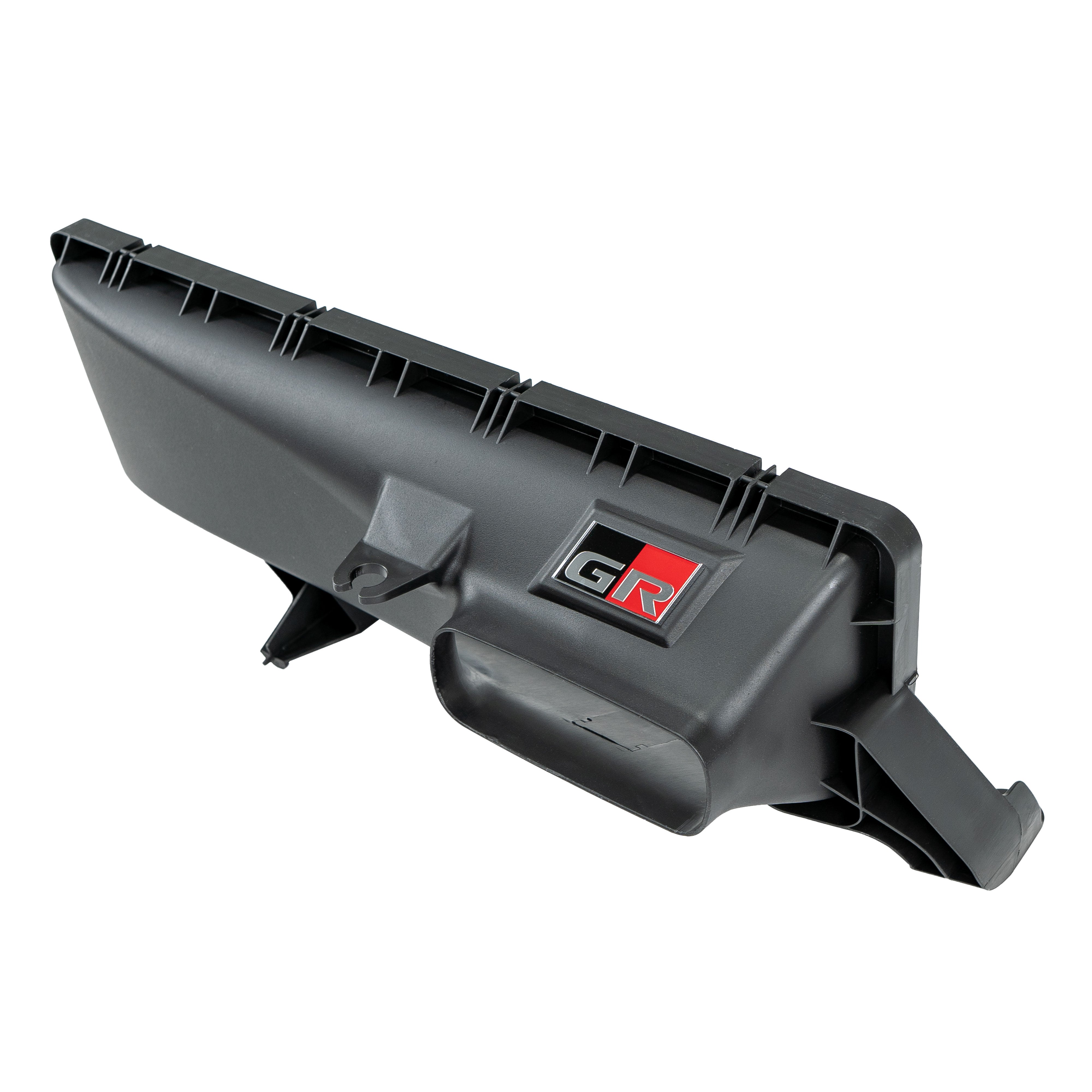
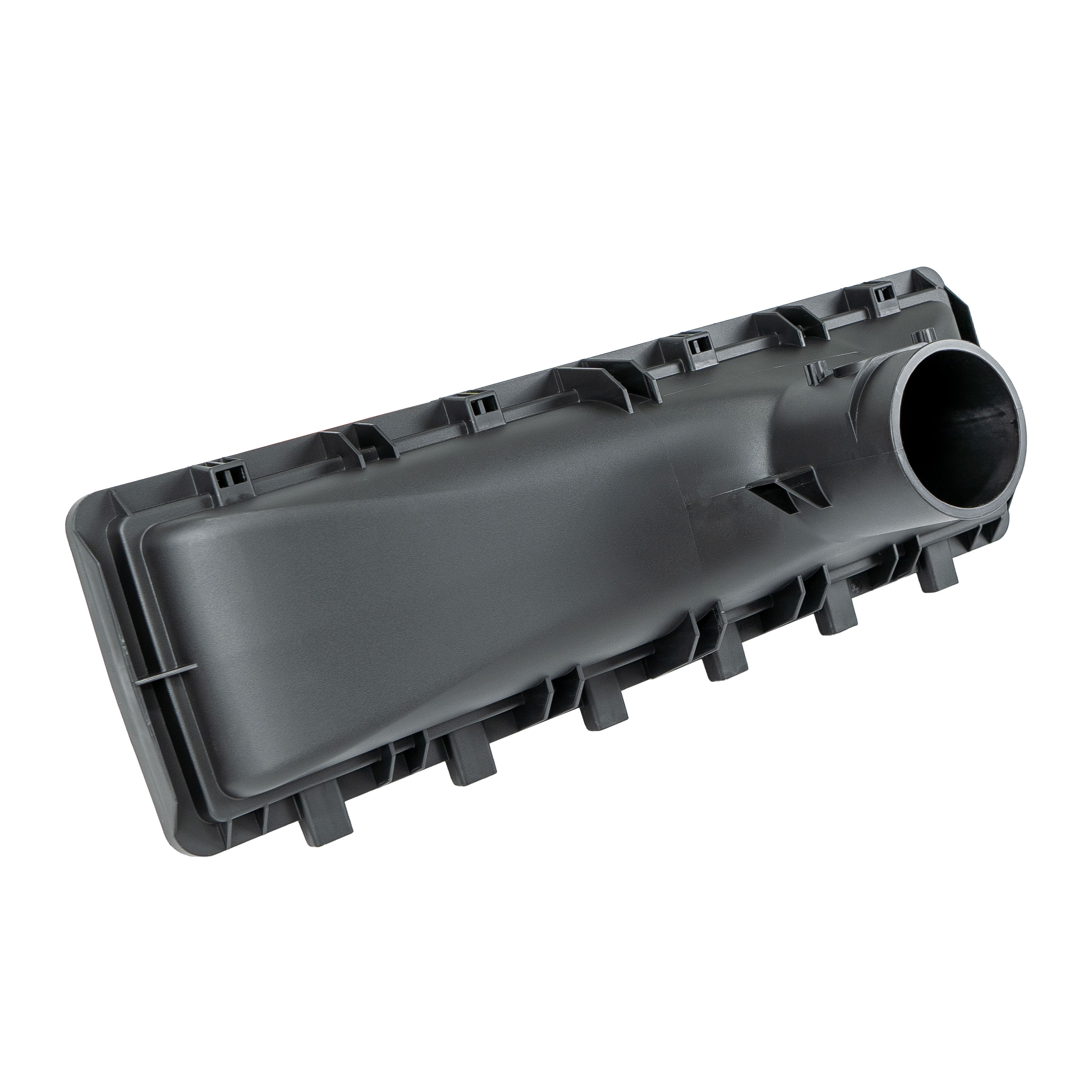
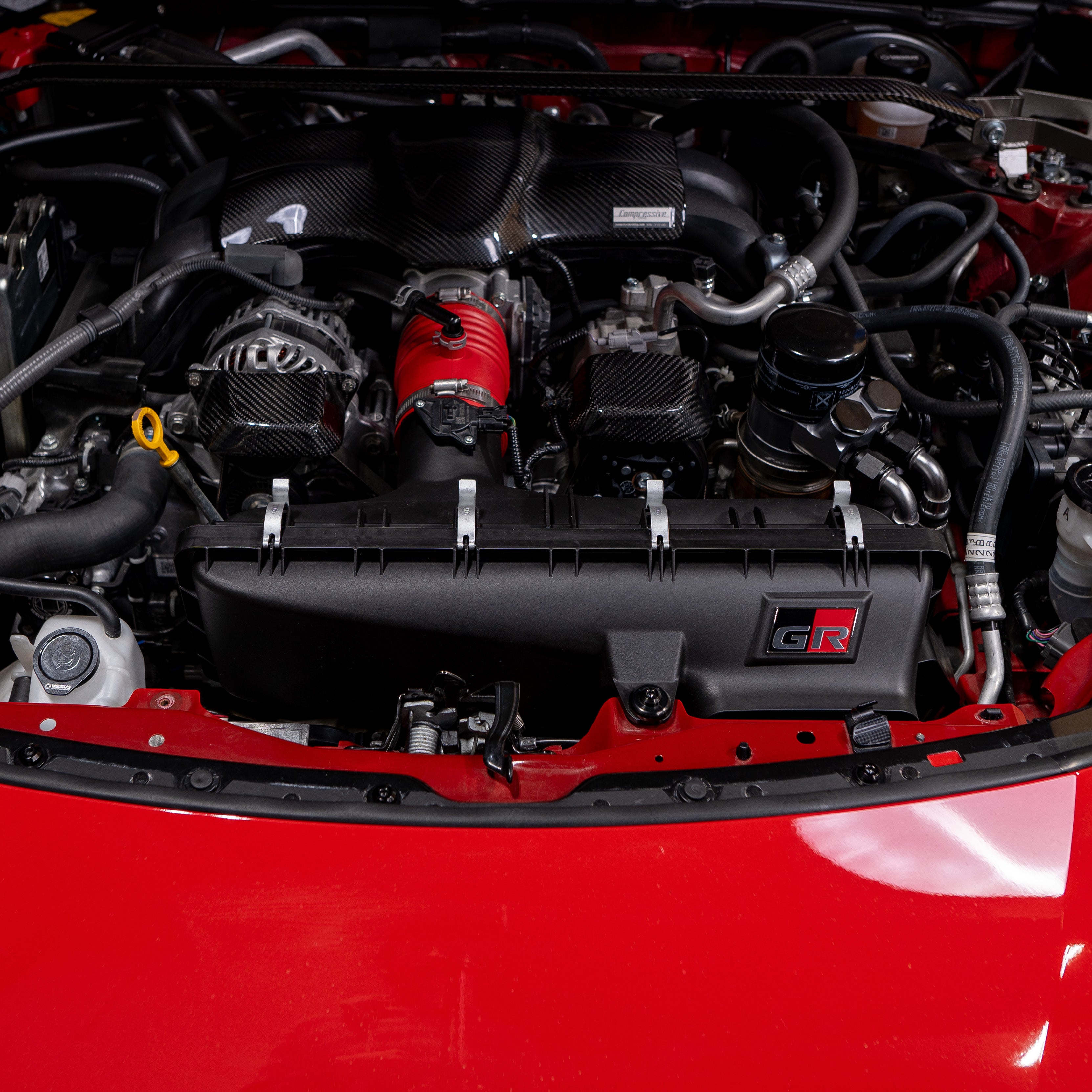
The GR Performance Air Intake is the most factory-like system in this comparison. It retains an enclosed airbox layout, uses a much larger filter surface than stock, and fits the engine bay like a part Toyota intended to be there—because it is.

That makes it the safest stylistic choice for an owner who wants a cleaner engine bay and a little more response without turning the intake into the visual centerpiece of the car. It is also designed for the factory ECU and is the least intimidating kit here to install. There is no complex carbon duct to align and no open filter sitting in the engine bay.

Driven.Media's listing cites third-party reports of 10–17 horsepower and 6–10 lb-ft of torque, including reports of up to 17 wheel horsepower. Those are impressive figures, but they should be treated as user-reported results rather than a controlled back-to-back test from Toyota. The real reason to choose this kit is the complete package: OE-level fit, restrained sound, factory-style heat isolation, and a straightforward installation.

Where the GR Performance intake wins

  • Best factory appearance and fit
  • Designed around the stock ECU
  • Simple installation
  • Enclosed airbox helps manage engine-bay heat
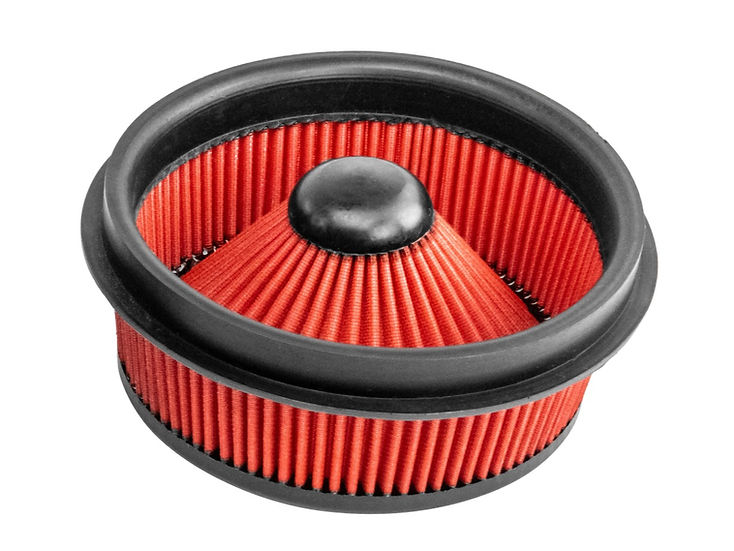
  • Easy to refresh with a genuine GR replacement filter

Where it gives something up

It is the least dramatic option. If your main goal is loud induction noise or a showcase carbon engine bay, the GR system may feel too conservative. Availability can also be inconsistent, so it is worth checking the current product page rather than planning around a specific delivery date.

Best for: The daily-driven GR86 or BRZ whose owner wants the intake to look, fit, and behave like an OEM upgrade.

GR Performance Air Intake

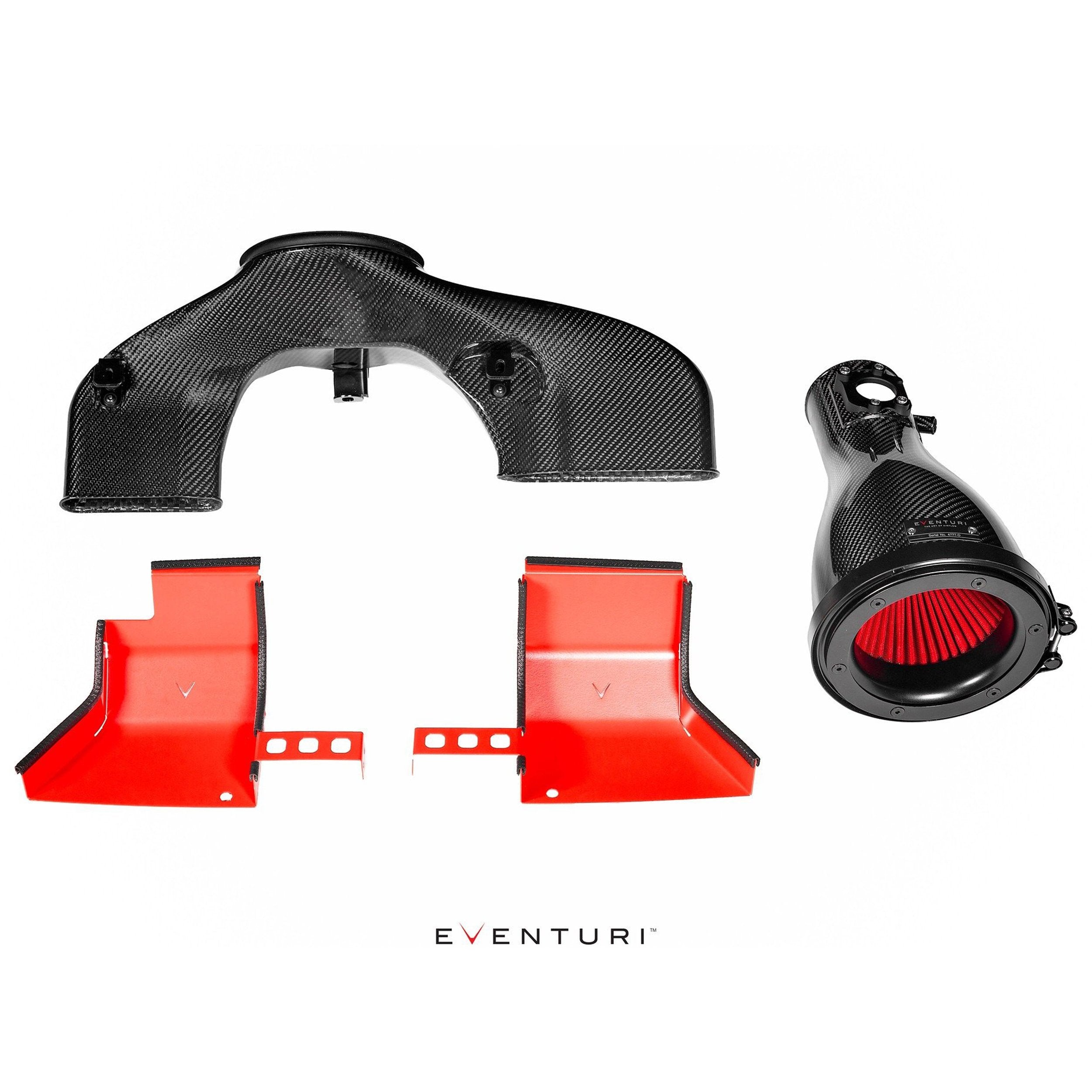
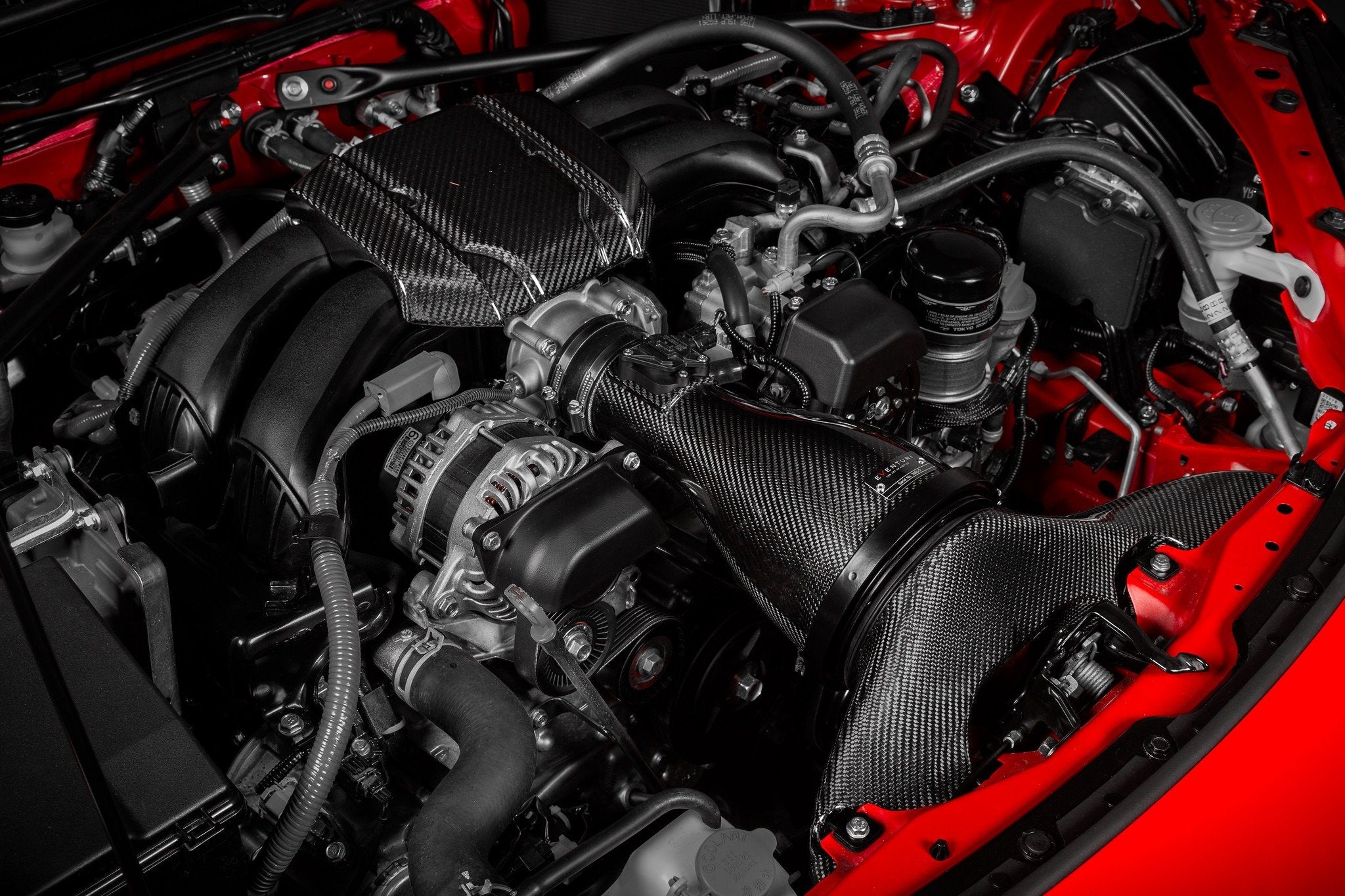
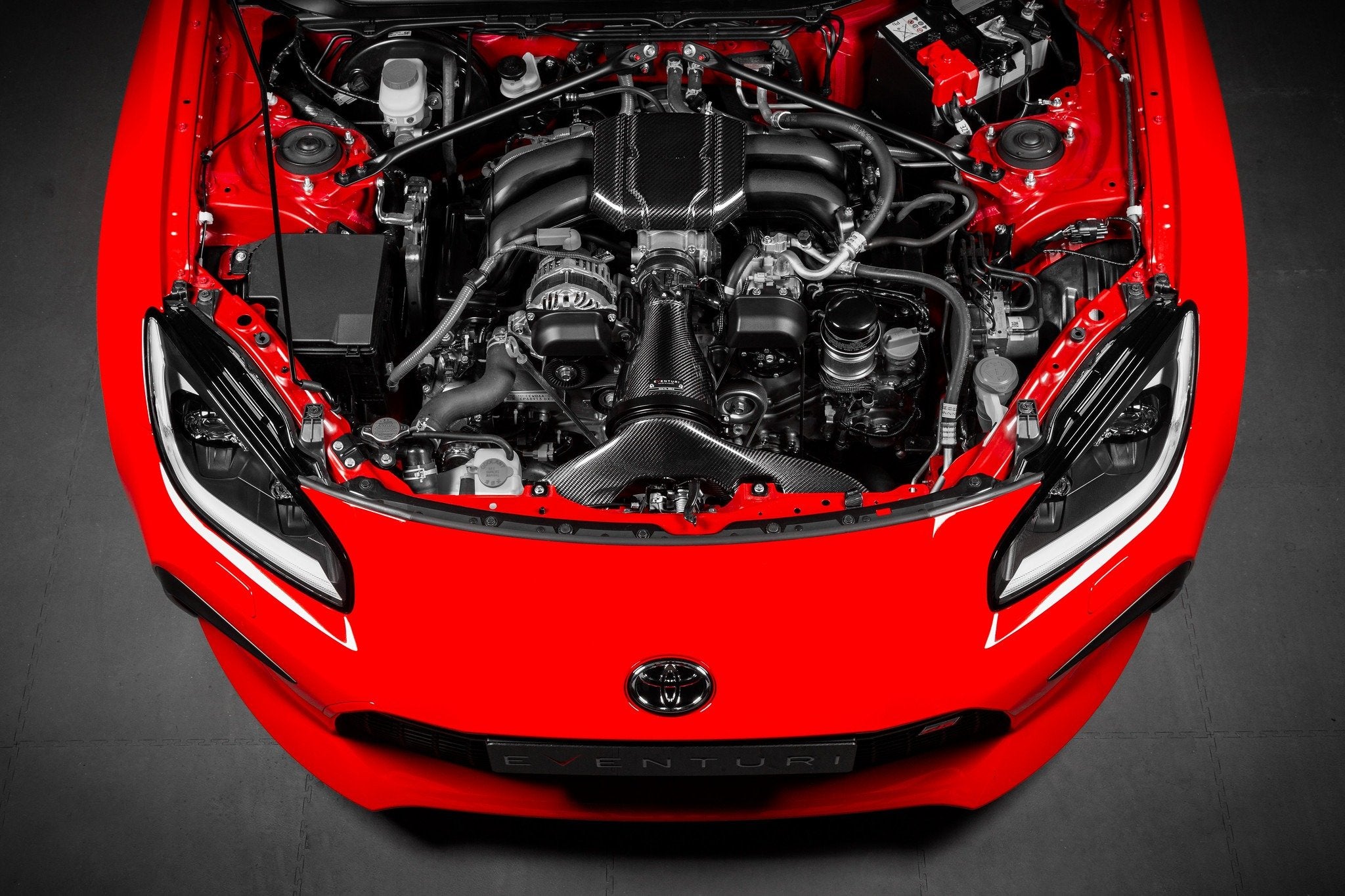
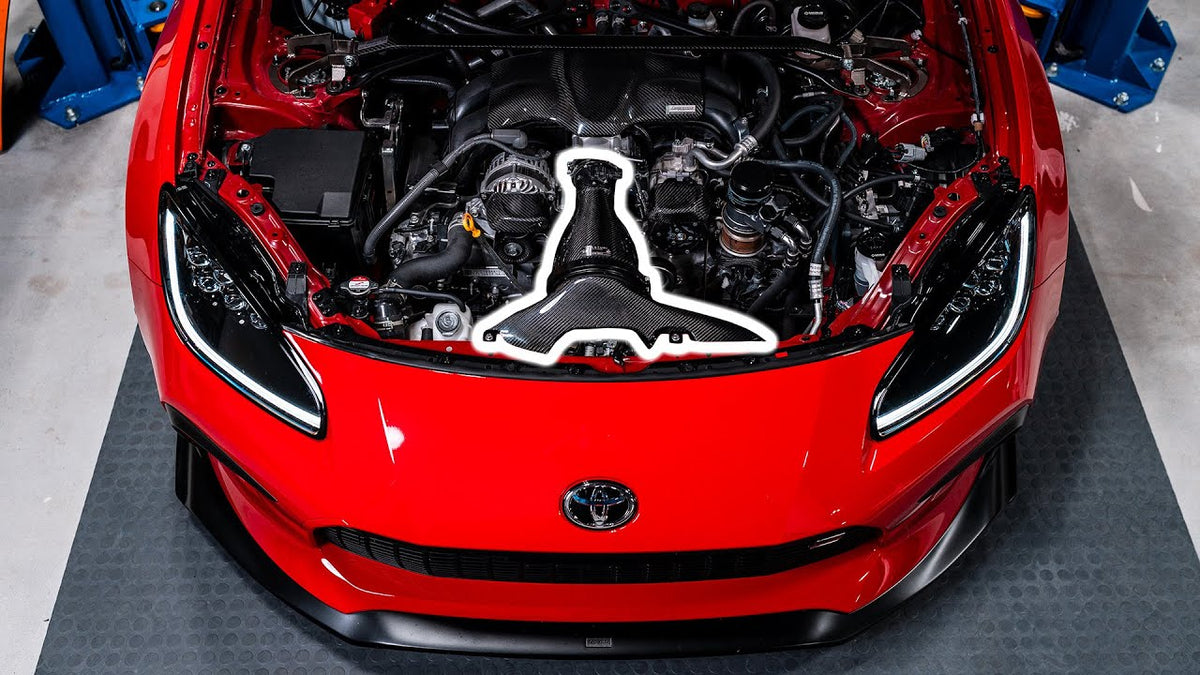
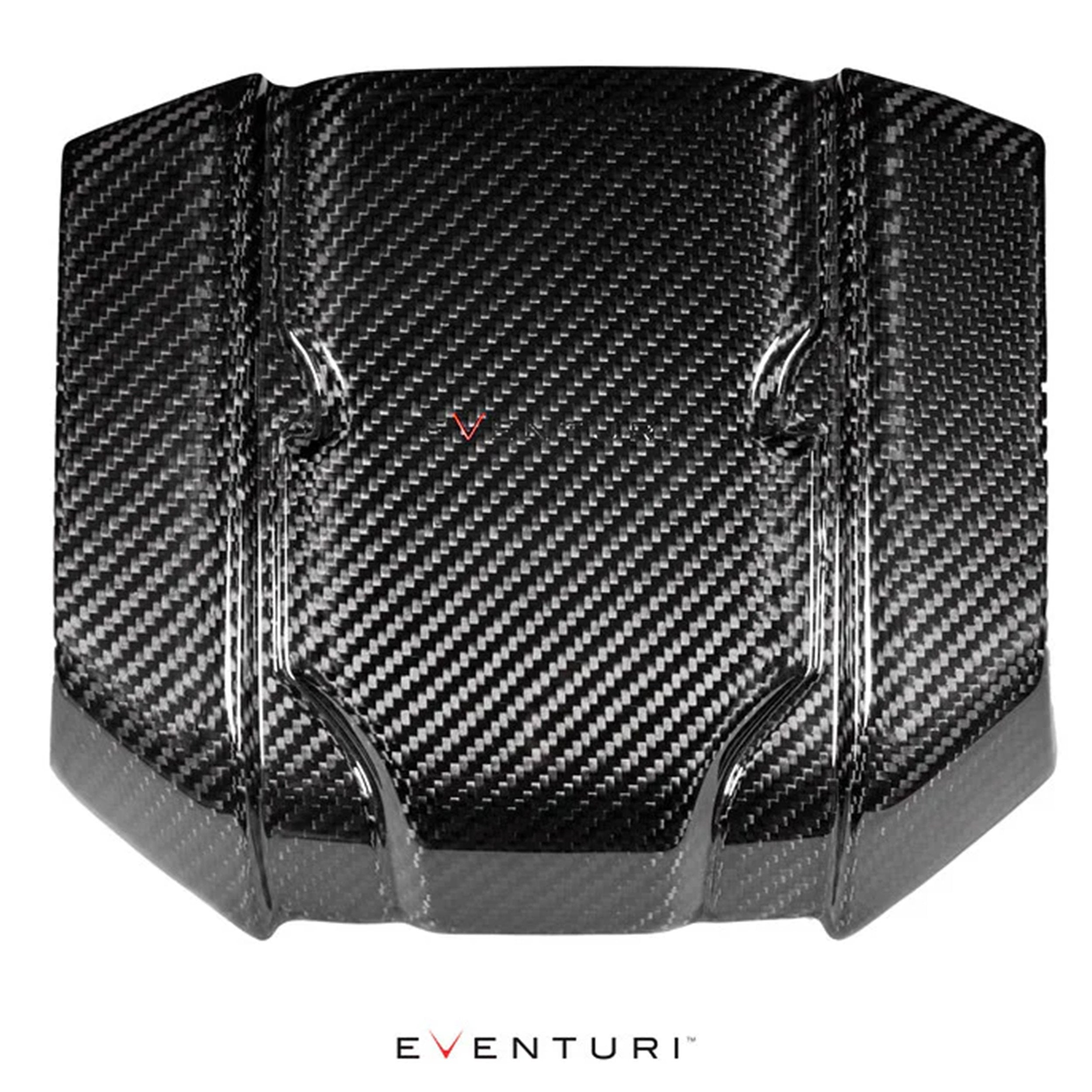
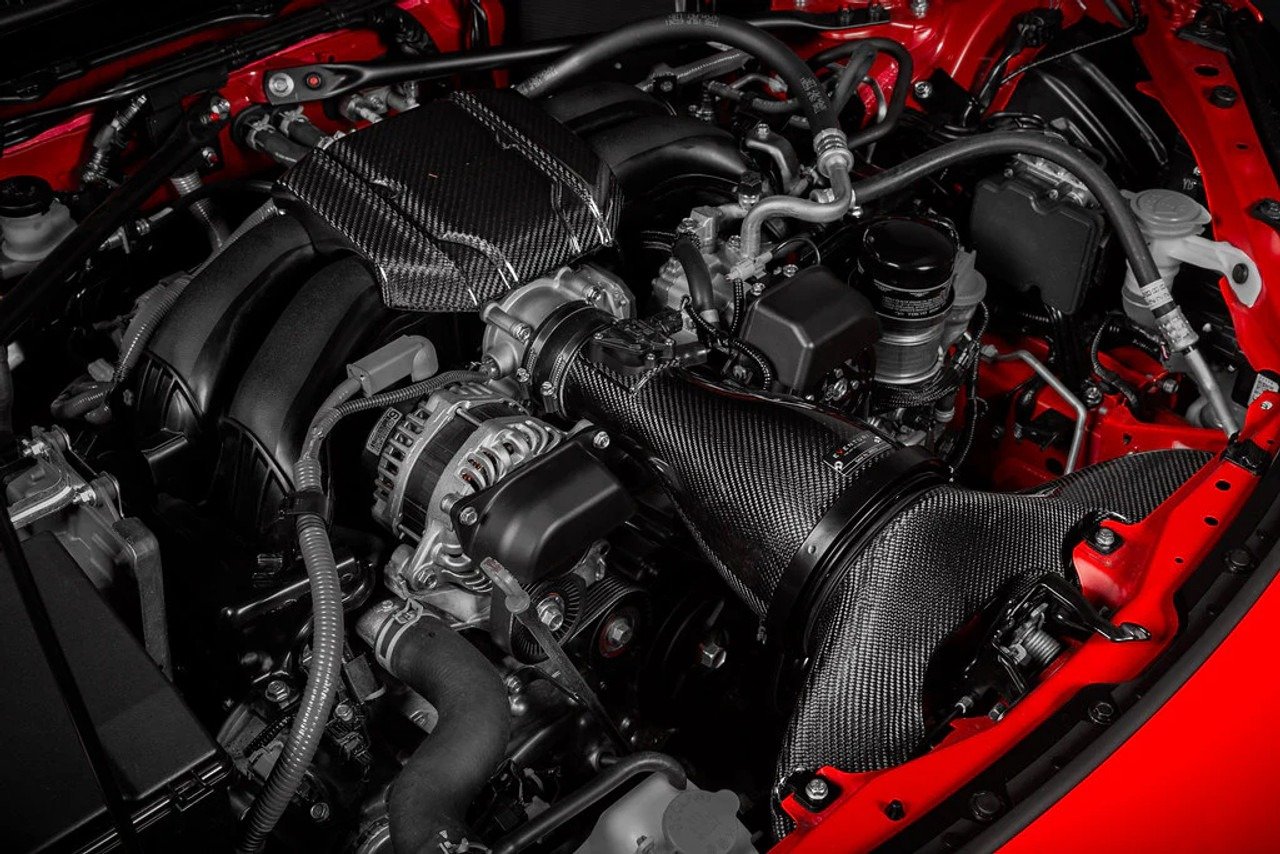
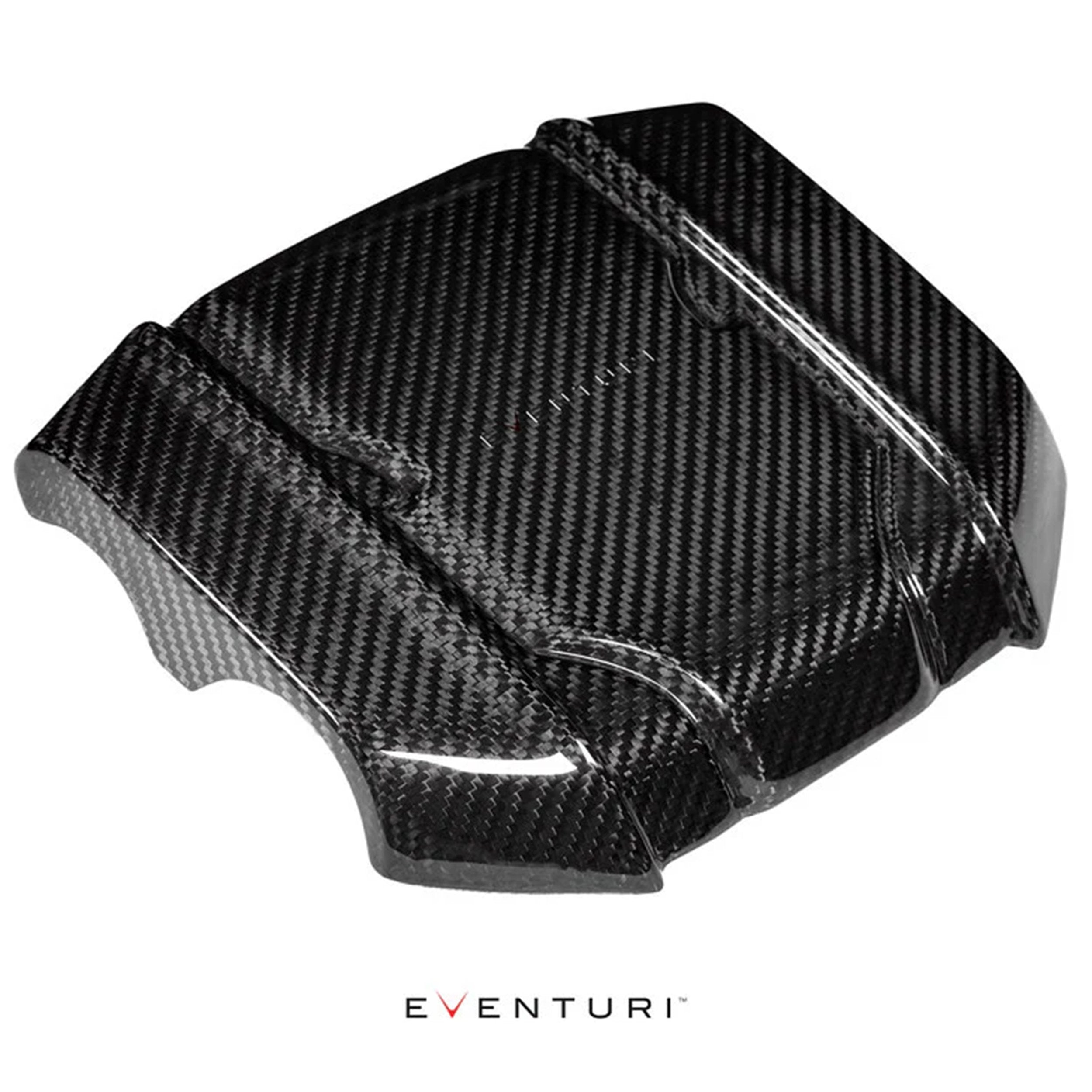
Eventuri says it evaluated numerous configurations across more than 125 dyno runs on both stock and tuned cars. That development matters because the FA24 shows a known resonance-related dip around 5,700–6,300 rpm when a higher-flowing intake is used with the stock ECU. Eventuri's final design minimizes that dip and then pulls ahead at the top of the rev range, with a claimed gain of 10–14 horsepower and 10–11 lb-ft of torque.

On a tuned car, the argument becomes stronger. Eventuri's tuned testing used the same E85 calibration while swapping only the airbox, and the revised calibration removed the resonance issue while allowing larger midrange gains. In other words, this is not just an expensive airbox. It is a system built to control temperature and airflow while leaving room for a more serious naturally aspirated setup.

Where the Eventuri wins

  • Highest-end construction and engine-bay presentation
  • Fully sealed design prioritizes intake-air temperature control
  • Dry filter avoids oiling during service
  • Extensive development on stock and tuned cars
  • Strong top-end and tuned-build potential

Where it gives something up

It is the most expensive intake in the comparison and the installation is more involved because the front scoops and ducting are part of the system. On the factory calibration, buyers should also understand the resonance dip rather than focusing only on the peak horsepower claim. The system still gains strongly near redline, but the power curve is more nuanced than one number suggests.

For long-term service, a dedicated Eventuri Type-S replacement filter is available.

Best for: The owner building a premium engine bay—or a tuned, high-revving naturally aspirated car—who values engineering, finish, and thermal control more than price.

Load video:

Driven.Media GR86 Eventuri Intake Overview + Install

Kevin installs and walks through the Eventuri CF Intake System for the GR86 / BRZ.

Watch on YouTube

K&N Typhoon: The Sound-and-Value Choice

Where the K&N wins

  • Most induction sound for the money
  • Simple, familiar bolt-on layout
  • Washable and reusable filter
  • Mandrel-bent aluminum tube
  • Strong value for a street car

Where it gives something up

An open-cone system with a heat shield cannot isolate the filter from engine-bay heat as completely as a fully sealed airbox. That does not make it a bad intake, but it does explain the philosophy: K&N prioritizes simplicity, sound, and accessible performance over elaborate thermal management. The oiled filter also needs the correct cleaning and re-oiling procedure, and K&N lists this part as not legal for sale or use on pollution-controlled vehicles in California.

Best for: The owner who wants a louder car, an easy install, and a recognizable performance intake without moving into four-figure carbon-fiber territory.

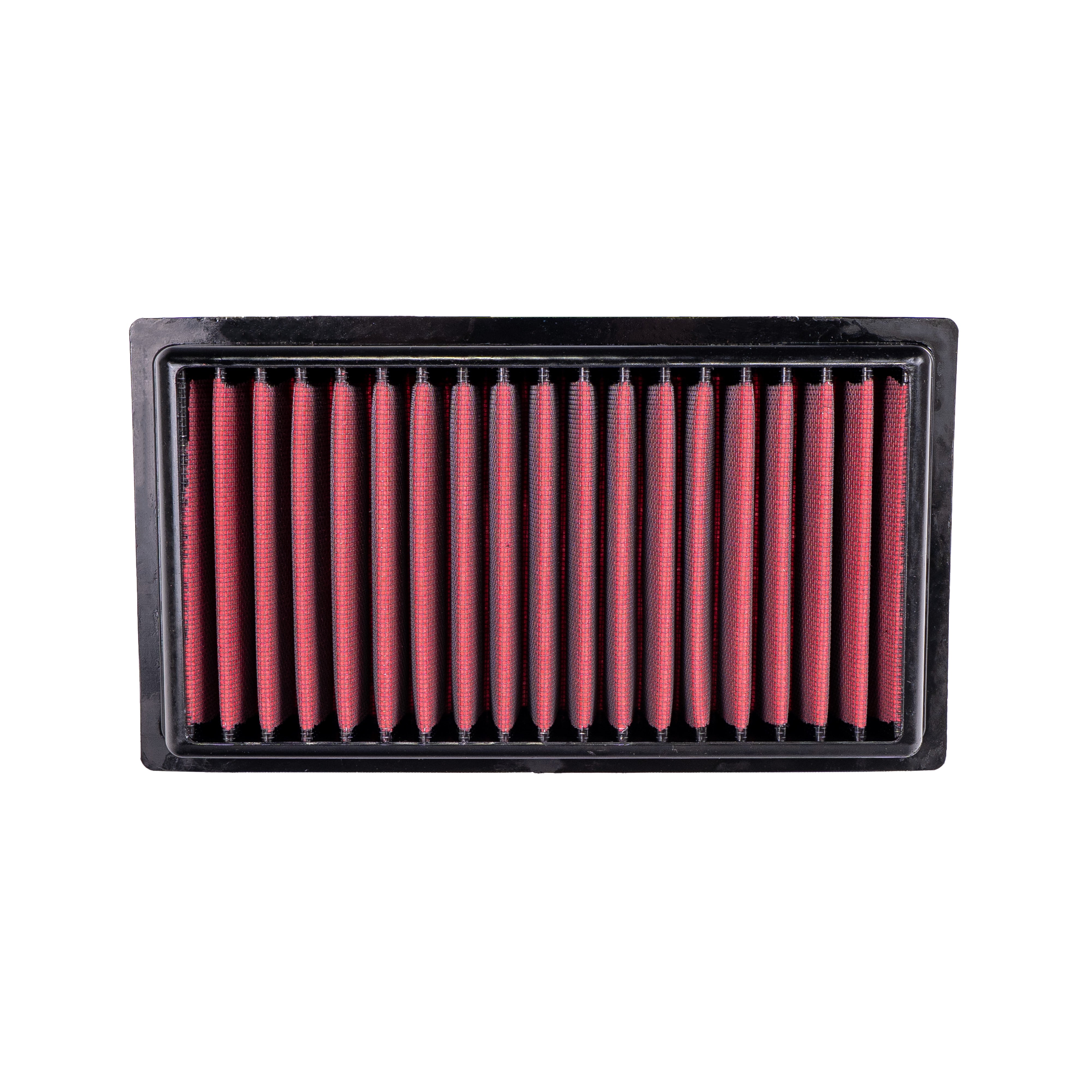
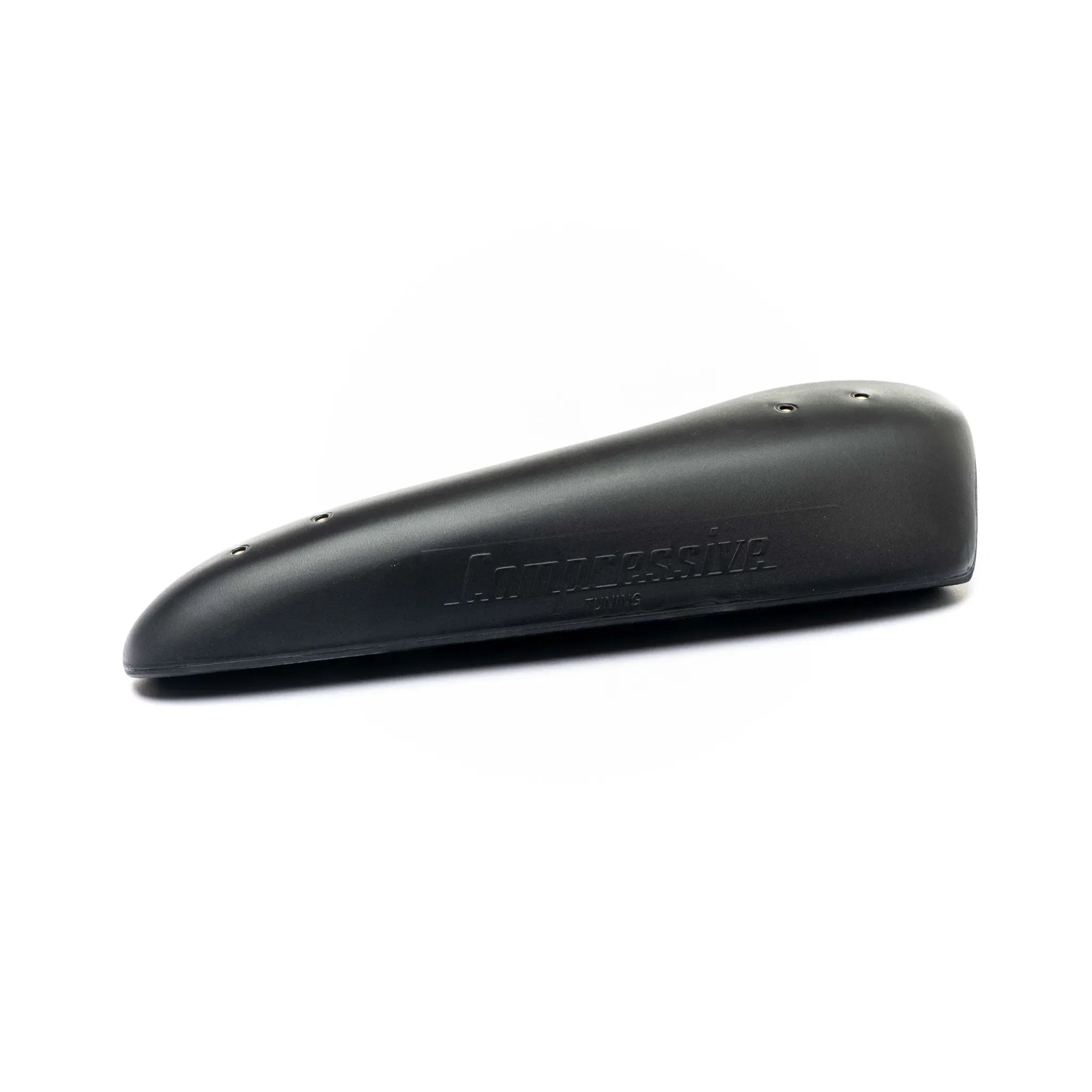
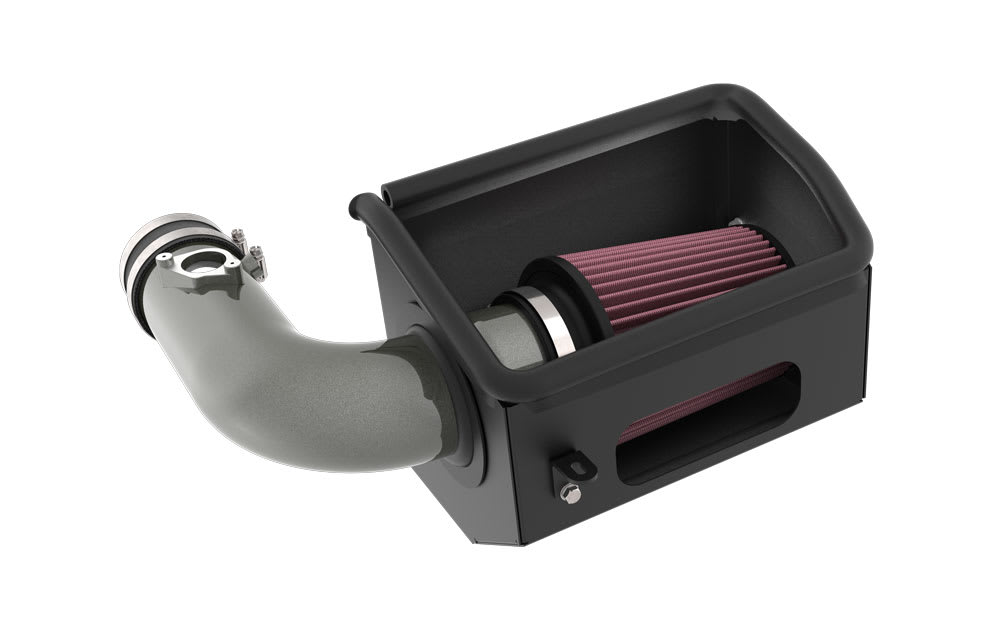
The K&N 69 Series Typhoon takes the classic aftermarket approach: a mandrel-bent aluminum tube, an oversized washable oiled-cotton cone filter, and a heat shield in place of the fully enclosed factory box. You can browse K&N performance products at Driven.Media while checking availability for part number 69-8624TC.

This is the option for the driver who wants to hear the FA24 working. With less material surrounding the filter, throttle openings and high-rpm pulls produce a more obvious induction note. It is also a relatively simple bolt-on and sits at the accessible end of this group financially.

K&N estimates an increase of 8.3 horsepower at 6,497 rpm and 5.3 lb-ft of torque for this system. It also specifies a washable RU-4630XD filter and a service interval of up to 100,000 miles under normal highway conditions. Real service frequency should still reflect how and where the car is driven; dusty conditions and track use justify more frequent inspection.

Shop K&N Inatke

The Short Answer

  • Best OEM+ intake: GR Performance
  • Best for sound and entry price: K&N Typhoon
  • Best flagship carbon system: Eventuri
  • Best overall balance: Infinity Designs

If we were choosing one intake for a performance-focused street build, Infinity Designs would be our all-around pick. It combines a sealed carbon airbox, a large front snorkel, stronger induction sound, and a power increase we measured on our own GR86. GR Performance remains the easiest recommendation for an OEM+ car, while K&N and Eventuri occupy the opposite ends of the sound-and-value versus premium-engineering spectrum.

Intake Design Published Gain Sound Install Best For
GR Performance Enclosed OEM-style airbox 10–17 hp and 6–10 lb-ft reported in third-party testing Mild Easiest OEM+ daily driver
K&N Typhoon Aluminum tube, open cone filter, heat shield 8.3 hp and 5.3 lb-ft estimated by K&N Loudest Easy Sound and value
Eventuri Sealed pre-preg carbon housing with dual-feed ducting 10–14 hp and 10–11 lb-ft claimed Deep and refined Most involved Premium or tuned build
Infinity Designs Sealed carbon airbox, bellmouth snorkel, large filter 10–12 hp and 5–10 lb-ft claimed; +6 hp and +6 lb-ft in our test Aggressive under load Moderate to involved Best all-around balance

Important: These numbers are not an apples-to-apples ranking. They come from different cars, dynos, fuels, calibrations, and test conditions. Use them to understand each manufacturer's development target, not to declare that one intake is automatically faster because its published number is larger.

Which Intake Should You Buy?

Choose GR Performance if you want factory confidence

This is the easy answer for a clean daily driver. It is subtle, enclosed, simple to install, and looks correct in an otherwise stock engine bay. It may not deliver the biggest sound change, but that restraint is the point.

Choose K&N if sound and value come first

The Typhoon makes the intake event part of the driving experience. It is less visually exotic and less isolated than the sealed systems, but it gives a street car more personality without demanding a premium-carbon budget.

Choose Eventuri if you are building the flagship version

If your build already includes premium carbon parts, or if you plan to tune the car and exploit the upper end of the FA24's airflow demand, the Eventuri is the most complete no-compromise design. You pay for that engineering and finish.

Choose Infinity Designs for the best overall balance

Infinity is our pick for the performance-minded street car because its argument extends beyond materials and manufacturer claims. It controls inlet temperature when installed as a complete system, sounds genuinely better, and produced a measurable gain on our own car.

Our Verdict

There is no universal winner because these intakes solve different problems. The GR Performance system is the best OEM+ upgrade. K&N is the value-and-sound choice. Eventuri is the premium, highly developed system with the clearest case for a tuned build. Infinity Designs is the strongest all-rounder and the one we can support with a back-to-back result from our own GR86.

The most important thing is to buy the intake that matches the rest of the car. A stock daily does not need to imitate a dyno-focused build, and a tuned car should not choose an intake on sound alone. Think about the complete power curve, heat management, service requirements, and how much of the upgrade you will appreciate every time you open the throttle.

Ready to compare current options? Browse our GR86 and BRZ intake collection, or contact Driven.Media if you want help matching an intake to your build plan.

Fitment note: This guide covers the second-generation 2022–2026 Toyota GR86 and Subaru BRZ platform. Product listings and manufacturer catalogs may be updated at different times, so confirm the exact year, trim, SKU, and emissions legality before ordering. Published performance figures vary with fuel, ECU calibration, dyno type, weather, vehicle condition, and test procedure.
Latest Stories

View all

22+ GR86 / BRZ Intake Comparison

22+ GR86 / BRZ Intake Comparison

The Short Answer Best OEM+ intake: GR Performance Best for sound and entry price: K&N Typhoon Best flagship carbon system: Eventuri Best overall balance: Infinity Designs If we were choosing one intake for a performance-focused street build, Infinity Designs would...

Read moreabout 22+ GR86 / BRZ Intake Comparison

GR86 Exhaust Bible | AWE Touring

GR86 Exhaust Bible | AWE Touring

Hear the AWE Touring Edition Catback on the Toyota GR86 across stock, catted, catless, equal-length, and unequal-length exhaust combinations. We also break down AWE 180 Technology and the system’s dyno results.

Read moreabout GR86 Exhaust Bible | AWE Touring

2027 Toyota GR86 First Look | 86 Day VLOG

2027 Toyota GR86 First Look | 86 Day VLOG

We're back out in California for 86 Day! I crammed in as much into these few days as I could. We installed an UEL header onto Kyle's VB WRX with the stock catback, went to an 86 meet hosted by / anothergr86   and  / thatredgr866  , hosted our own meet with @spamsubie at @BattleAero , then we set up our booth over at Alpharex for their 86 Day meet with GR Movement which was a huge success! I probably saw more 86s there than I've seen in 3 years in Iowa! Thank you to everyone who came by to say hi! After that, we spent the next morning ripping some canyon roads with Tim and Adriel's GR86s!

Read moreabout 2027 Toyota GR86 First Look | 86 Day VLOG